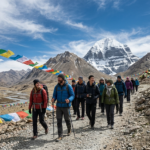

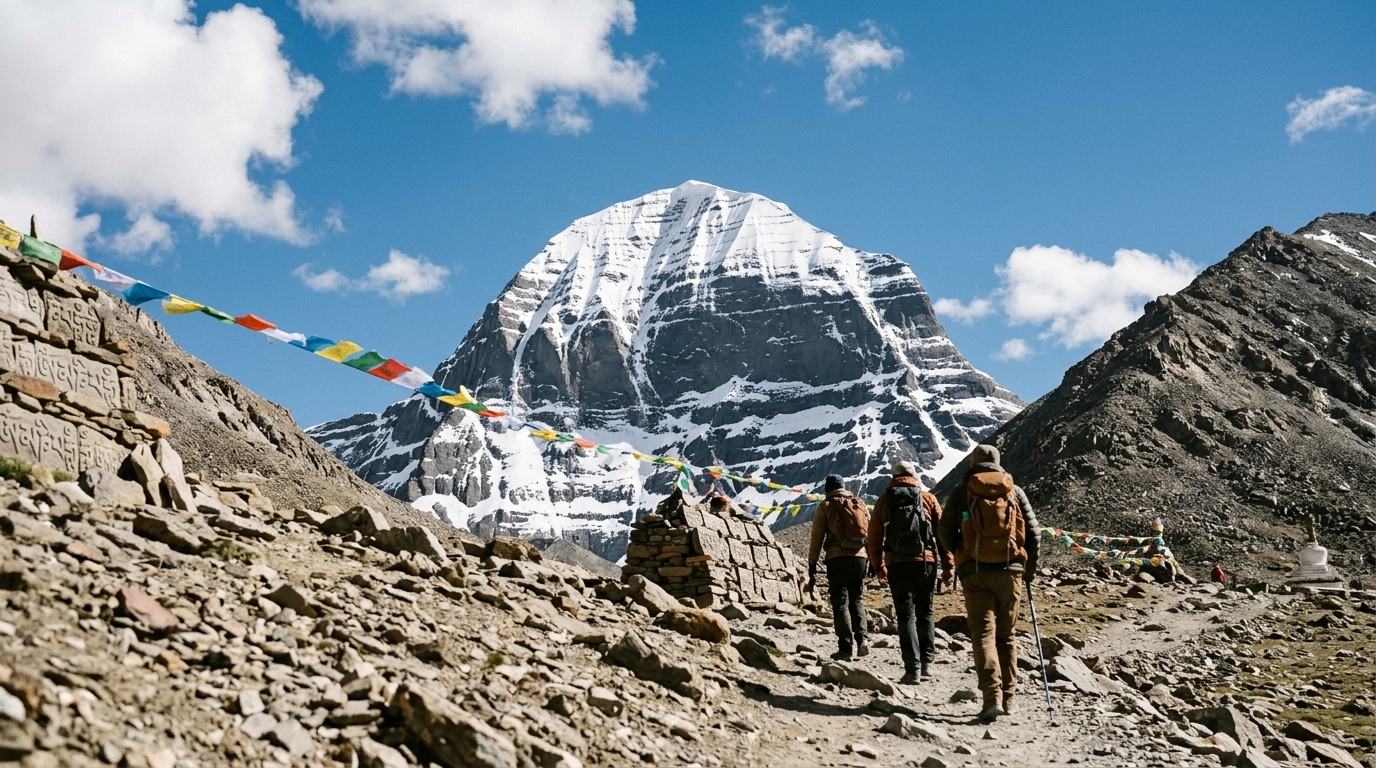
Step-by-Step Guide to Planning Your Mount Kailash Trip 2027
The Mount Kailash Yatra is not a trip you book the way you book a beach holiday. It involves a restricted border crossing into Tibet, multiple permits issued by different authorities, a fixed travel window of roughly five months a year, and three days of high-altitude trekking that most people have never attempted before. None of that should put you off. It should simply tell you that planning matters here in a way it does not for most trips.
This guide walks you through the entire planning process for a 2027 Mount Kailash Yatra in seven steps, in the order most pilgrims actually need to think about them. By the end, you will understand what the journey involves, how to choose your route, what permits and visas you need, when to go, what the itinerary actually looks like day by day, what to pack, and what it costs. If you are at the very start of planning your Mount Kailash Manasarovar Yatra 2027, this is the page to start with.
QUICK OVERVIEW: Most pilgrims travel from Kathmandu via the Kerung overland border into Tibet, on a 14-day itinerary that includes the 3-day Kailash Kora. Permits take 14 to 17 days to process and should be started 45 to 60 days before your intended Tibet entry date. The travel season runs May to mid-September.
Step 1: Understand What the Mount Kailash Yatra Actually Involves
Before booking anything, it helps to understand what you are actually signing up for, because the Mount Kailash Yatra is genuinely unlike most travel experiences.
Mount Kailash sits at 6,638 meters in the Ngari Prefecture of western Tibet, in one of the most remote inhabited regions on earth. No one has ever climbed it, and no one is permitted to. For Hindus, it is the eternal abode of Lord Shiva. For Tibetan Buddhists, it is Kang Rinpoche, a mountain of profound spiritual power. For Jains, it is connected to the liberation of Rishabhanatha, the first Tirthankara. For Bon practitioners, followers of Tibet’s pre-Buddhist tradition, it has been sacred for longer than either Buddhism or Hinduism has existed in the region.
The pilgrimage itself has two core components. The first is Lake Manasarovar, a vast, deep blue lake at 4,590 meters where pilgrims perform ritual bathing and prayer, believed to purify the mind and spirit. The second is the Kailash Parikrama, often called the Kora, a 52-kilometer trek around the base of the mountain over three days, crossing Dolma La Pass at 5,645 meters. Completing the Kora is believed across multiple traditions to cleanse the accumulated effects of a lifetime.
Understanding this matters for planning because it shapes everything that follows. This is not primarily a trekking holiday with some sightseeing attached. It is a pilgrimage with a genuinely demanding physical component, and every other step in this guide exists to help you arrive at Darchen prepared for both halves of that experience.
Step 2: Choose Your Route to Mount Kailash
Independent travel to Tibet is not permitted for foreign nationals. Every route to Mount Kailash requires a licensed tour operator, and for the vast majority of international pilgrims, that journey begins in Kathmandu, Nepal.
The standard and most recommended route is the overland journey via the Kerung border, sometimes written as Gyirong. This is a 14-day itinerary from Kathmandu back to Kathmandu, and it is the route used by our Mount Kailash Overland Tour and built into the Mount Kailash Manasarovar Yatra 2027 fixed departures. The journey takes you by road from Kathmandu to the Nepal-Tibet border, across into Tibet, and then across the Tibetan plateau through Saga to Lake Manasarovar and on to Darchen, the base camp for the Kora.
The overland route is recommended for three reasons. First, the gradual ascent by road, from Kathmandu at 1,355 meters up to the plateau over several days, gives your body a far better chance to acclimatize than flying directly into high altitude. Second, the road journey itself passes through dramatic Himalayan and Tibetan plateau scenery that many pilgrims describe as part of the experience rather than simply a means of getting there. Third, this is the route with the most established infrastructure, the most experienced operators, and the most predictable permit processing.
Customization Options Within the Standard Route
While the Kerung overland route is the standard, it can be customized in several ways depending on your interests and schedule.
- Extended via Lhasa: Some itineraries route through Lhasa, adding 3 to 4 days to visit the Potala Palace, Jokhang Temple, and other significant Tibetan Buddhist sites before continuing to Kailash. This extends the standard itinerary to roughly 17 to 18 days.
- Helicopter assistance: For pilgrims with time constraints or mobility considerations, helicopter assistance can be arranged on specific legs of the journey, reducing road travel time. This is typically arranged as part of a private trip rather than a fixed group departure.
- Private group departures: If you have a specific group, whether family, friends, or a devotional community, a Mount Kailash Private Trip allows you to choose your own departure date within the season and adjust the pace of the itinerary to suit your group.
For most first-time pilgrims, the standard 14-day Kerung overland itinerary on a fixed group departure represents the best balance of cost, acclimatization, and proven reliability. The customization options above exist for pilgrims with specific needs, not as equally weighted alternatives to the standard route.
Step 3: Sort Out Permits and Visas Early
This is the step that catches the most first-time planners off guard, and it deserves to be addressed early in your planning process rather than left until the last minute. The permit and visa requirements for Tibet are genuinely complex, involve multiple authorities, and have processing timelines measured in weeks, not days.
Tibet Travel Permit
The Tibet Travel Permit, issued by the Tibet Tourism Bureau, is the foundational document required for any foreign national to enter the Tibet Autonomous Region. It cannot be applied for independently. It must be arranged through a registered travel agency, using scanned copies of your passport, and typically takes 7 to 10 business days to process.
Chinese Group Visa
For pilgrims travelling the Nepal overland route, a Chinese Group Visa is required in addition to the Tibet Travel Permit. This is issued in Kathmandu, where your tour operator submits your original passport to the Chinese Embassy. Processing typically takes 3 to 5 business days, and the visa is issued for the group as a whole, with a minimum group size of 5 people for visa purposes.
Alien’s Travel Permit
Once inside Tibet, a further Alien’s Travel Permit is required to travel beyond Lhasa into the restricted areas that include the Kailash and Manasarovar region. This is arranged by your operator’s local guide once you are in Tibet and does not require any additional action from you in Kathmandu.
Nepal Entry Visa
Most nationalities can obtain a Nepal tourist visa on arrival at Tribhuvan International Airport in Kathmandu, valid for 15, 30, or 90 days depending on your needs. This is a straightforward process requiring a passport photo and a visa fee payable in cash, usually in US dollars. It is a minor step compared to the Tibet documentation, but worth confirming against your specific nationality before you travel.
TIMELINE TO REMEMBER: The combined Tibet Travel Permit and Chinese Group Visa process takes 14 to 17 days from first submission. Start this process 45 to 60 days before your intended Tibet entry date. For a complete breakdown of this process, see our dedicated guide to Kailash Yatra permit processing time from Kathmandu.
The reassuring part of this entire step is that a registered operator handles essentially all of it. Your responsibility is to provide accurate documents on time and to start the process early enough. For a full explanation of exactly what permits exist and which route requires which documents, see our guide to required permits for Mount Kailash trip by route.
Step 4: Choose the Right Time for Your 2027 Yatra
The Mount Kailash Yatra operates on a strict seasonal window. Outside this window, both the trekking conditions at altitude and the permit system make the journey effectively impossible for the vast majority of pilgrims.
| Day | What Happens |
| 1 | Arrival in Kathmandu. Hotel check-in, evening visit to Pashupatinath Temple. |
| 2 | Kathmandu sightseeing, including Boudhanath Stupa and Swayambhunath. Operator begins permit and visa processing. |
| 3 to 13 | Permit and visa processing period in Kathmandu. Most operators schedule the actual departure for Tibet once documents are ready, typically around days 12 to 14, with earlier days available for additional sightseeing or rest. |
| Drive to Kerung border | Overland drive from Kathmandu toward the Nepal-Tibet border at Kerung (Gyirong), crossing into Tibet. |
| Drive to Saga | Crossing the Tibetan plateau, first major acclimatization stop at approximately 4,500 meters. |
| Drive to Lake Manasarovar | Arrival at the sacred lake, ritual bathing and prayer at the shores. |
| Drive to Darchen | Short drive to Darchen, the base camp for the Kora, at 4,575 meters. |
| Kora Day 1 | Trek from Darchen via Yama Dwar to Dirapuk, 12 km, first views of the north face of Kailash. |
| Kora Day 2 | The hardest day. Trek over Dolma La Pass at 5,645 meters to Zuthulphuk, 22 km. |
| Kora Day 3 | Complete the Kora back to Darchen, approximately 14 km. |
| Return drive | Drive back across the plateau toward the Nepal border. |
| Return to Kathmandu | Cross back into Nepal, drive to Kathmandu. |
| Departure | Transfer to Kathmandu airport for international departure. |
The three days of the Kora are, by a wide margin, the most physically demanding part of the journey, and they deserve their own focused preparation. For a complete day-by-day breakdown of exactly what those three days involve, including altitude profiles, what the guesthouses and facilities are actually like, and yak and pony costs, see our detailed guide on what to expect during the Mount Kailash Parikrama.
Step 6: Pack Properly for High Altitude Travel
What you pack matters more on this trip than on almost any other type of travel, because once you leave Kathmandu, there is no opportunity to buy anything you forgot. The core categories to plan for are layered clothing for extreme temperature swings, altitude-related health items, and a small set of comfort items that make a genuine difference over multiple days at altitude.
- Layered clothing: A moisture-wicking base layer, an insulating mid layer such as fleece or down, and a windproof, waterproof outer shell, plus thermal wear for sleeping
- Footwear: Sturdy, well broken-in trekking boots, ideally waterproof, along with warm socks
- Sun and cold protection: UV-rated sunglasses, high-SPF sunscreen, lip balm, a warm hat, and gloves
- Health items: Personal medications, Diamox (acetazolamide) if recommended by your doctor for altitude sickness, and water purification tablets if you prefer not to rely solely on provided boiled water
- Practical extras: A reusable water bottle, high-calorie snacks you actually enjoy, a small daypack, a headtorch with spare batteries, and a power bank, since charging facilities are limited during the Kora
- Documents and money: Passport copies, and extra cash in a mix of US dollars, Nepali rupees, and Chinese yuan for incidental expenses
FITNESS TIP: Begin physical preparation at least 6 to 8 weeks before departure, focusing on cardiovascular fitness such as hiking, brisk walking, or stair climbing, built up to multi-hour sessions on consecutive days. This matters more for your experience on the Kora than any single item on your packing list.
This is a condensed overview of what to bring. For a complete packing list specifically tailored to the three days of the Kora, including why each item matters and what the actual conditions at Dirapuk and Zuthulphuk are like, see our detailed guide on what to expect during the Mount Kailash Parikrama.
Step 7: Understand the Cost and Choose the Right Operator
Cost is usually the first practical question anyone asks once they have decided they want to do this trip, and it is reasonable to want a clear picture before going further. Mount Kailash Yatra packages vary based on group size, route, accommodation standard, and the level of customization involved.
| Package Type | Typical Duration | Best Suited For |
| Fixed Group Departure (Overland) | 14 days | First-time pilgrims, those comfortable joining a group, best value per person |
| Fixed Departure with Lhasa Extension | 17 to 18 days | Pilgrims who want to combine the Yatra with significant cultural sightseeing in Lhasa |
| Mount Kailash Private Trip | 14 days, flexible dates | Families, devotional groups, friend groups, and corporate groups wanting control over dates and pace |
| Saga Dawa Festival Tour | 14 to 16 days, fixed 2027 dates | Pilgrims prioritizing the spiritual significance of the Saga Dawa period |
| Full Moon Tour | 14 days, fixed 2027 dates | Pilgrims wanting to align their Kora with a full moon |
All packages include permit and visa processing, accommodation, meals as specified, ground transport, an experienced guide, and basic safety provisions such as oxygen and first aid. What differs between packages is primarily the route, the departure flexibility, and the level of customization available to your group.
What to Look for in an Operator
Because this journey cannot legally be done independently, choosing the right operator is one of the most consequential decisions in the entire planning process. Look for an operator registered with the Nepal Tourism Board and a member of TAAN (Trekking Agencies Association of Nepal), with demonstrated experience specifically on the Kailash route rather than general Himalayan trekking experience alone. Ask directly about their permit processing track record, the qualifications and experience of their guides at altitude, and what their emergency protocols are if a group member experiences altitude sickness during the Kora.
Mount Kailash Trip is registered with the Nepal Tourism Board and is a member of TAAN and the Nepal Mountaineering Association, with guides experienced specifically on the Kerung overland route to Kailash and Manasarovar. Whether you choose a fixed group departure for 2027, a private trip built around your own group, or one of the festival-aligned departures, the planning principles in this guide apply to all of them.
If your group includes older travelers, our Mount Kailash Trip for Seniors package addresses the specific pacing and support considerations that come with planning this trip for pilgrims in their 60s, 70s, or beyond.
Frequently Asked Questions About Planning Your Mount Kailash Trip
Q1. How far in advance should I start planning a Mount Kailash trip for 2027?
Most experienced pilgrims begin serious planning 3 to 4 months before their intended travel dates, and earlier for May or June departures or for dates aligned with Saga Dawa or full moon periods, which fill up faster. The permit process alone requires 45 to 60 days of lead time before your Tibet entry date, so working backward from your target travel window is the most reliable way to set your planning timeline.
Q2. What is the best route for a first-time Mount Kailash pilgrim?
For most first-time pilgrims, the standard 14-day overland route from Kathmandu via the Kerung border is the best choice. It offers gradual acclimatization through road travel, the most established operator infrastructure, and the most predictable permit processing. Routes via Lhasa or with helicopter assistance can be excellent for specific needs, but they are best considered as customizations once you understand the standard route rather than starting points for first-time planning.
Q3. Do I need to arrange anything before contacting a tour operator?
Very little, which is part of why working with a registered operator early is helpful. You will need a valid passport with at least 6 months validity from your intended Tibet entry date and at least 2 blank pages, a handful of passport-sized photographs, and travel insurance that covers high-altitude emergency evacuation. Everything else, including permit applications, visa processing, and itinerary planning, is handled by your operator once you provide these basic documents.
Q4. How long does the entire Mount Kailash Yatra take from start to finish?
The standard overland itinerary is 14 days from arrival in Kathmandu to departure, including the permit processing period in Kathmandu and the 3-day Kora. Itineraries with a Lhasa extension run 17 to 18 days. The actual time spent in Tibet, including the Kora, is typically 10 to 12 days within that total.
Q5. What is the difference between a fixed group departure and a private trip?
A fixed group departure follows a set itinerary on dates determined by the operator, joining you with other pilgrims who booked individually, and is generally the most cost-effective option per person. A Mount Kailash Private Trip gives your group exclusive use of the vehicle and guide, lets you choose your own departure date within the 2027 season, and allows the pace and itinerary to be adjusted to your group’s needs. Both follow the same core route and permit process.
Q6. Is the Mount Kailash Yatra safe for someone with no high-altitude trekking experience?
Yes, with proper preparation. Many pilgrims who complete the Yatra have no prior high-altitude experience. What matters most is reasonable cardiovascular fitness built up in the months before travel, following the acclimatization schedule built into the itinerary, particularly the gradual ascent across the Tibetan plateau before reaching Darchen, and being honest with your guide about how you are feeling at each stage. Experienced operators build acclimatization days into the itinerary specifically because most pilgrims have not done anything like this before.
Q7. What happens during the Kathmandu permit processing days, and is that time wasted?
The permit processing period in Kathmandu, typically the first 10 to 14 days depending on your departure batch, is not wasted time. Most operators use these days for Kathmandu sightseeing, including significant sites such as Pashupatinath Temple and Boudhanath Stupa, as well as rest before the more demanding plateau and Kora portions of the trip. For pilgrims who have never visited Kathmandu, this period is itself a meaningful part of the broader pilgrimage experience.
Q8. Can I customize the standard itinerary if I have specific requirements?
Yes. The standard 14-day itinerary described in this guide is the template used for fixed group departures, but it can be adjusted in several ways through a Mount Kailash Private Trip, including extra rest days, different pacing on the Kora, the inclusion of a Lhasa extension, or accommodating specific ritual or scheduling needs for devotional groups. If you know in advance that your group has specific requirements, mentioning this when you first contact an operator allows these adjustments to be built into the planning from the start.
Q9. How much should I budget beyond the package cost itself?
Beyond your package cost, budget for international airfare to and from Kathmandu, travel insurance with high-altitude emergency evacuation coverage, the Nepal entry visa fee, personal trekking gear if you do not already own it, tips for guides and support staff, and optional yak, pony, or porter hire during the Kora if you choose to use this support. Most operators, including Mount Kailash Trip, provide a clear breakdown of what is and is not included in the package price when you request a quote.
Q10. What is the single most common planning mistake first-time pilgrims make?
The most common mistake is underestimating the permit timeline and booking international flights before permits are confirmed. Because the Tibet Travel Permit and Chinese Group Visa process takes 14 to 17 days and is subject to occasional delays during peak season or around Chinese public holidays, booking flexible flights or waiting for permit confirmation before finalizing travel dates avoids the most common source of last-minute stress in the entire planning process.
Begin Planning Your Mount Kailash Yatra 2027
Seven steps, one journey. Understanding what the Yatra involves, choosing the right route, getting permits moving early, picking the right window in the 2027 season, knowing what the itinerary actually looks like, packing properly, and choosing an operator you trust. None of these steps is complicated on its own. Together, they are the difference between a trip that feels chaotic and one that lets you focus entirely on the experience itself once you arrive in Kathmandu.
If you are ready to take the next step, explore our Mount Kailash Manasarovar Yatra 2027 departures for fixed group dates, or our Mount Kailash Overland Tour for full details on the standard 14-day route described throughout this guide. If your group has specific needs around dates, pace, or size, our Mount Kailash Private Trip can be built around them from the start.
Whatever stage of planning you are at, we are happy to talk through your options. Send us an email or message us on WhatsApp, and we will help you turn this guide into an actual itinerary with real dates for 2027.
Recent Posts
Mount Kailash Kora Distance and Difficulty
Where Is Mount Kailash Located?
Common Visa Mistakes for Mount Kailash Trip
Kailash Yatra Permit Processing Time from Kathmandu
Required Permits for Mount Kailash Trip by Route
Do You Need a Visa for Mount Kailash Trip
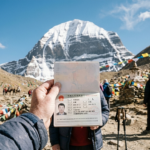
Visa for Mount Kailash Trip
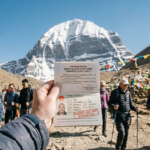
Age Limit for Mount Kailash Yatra
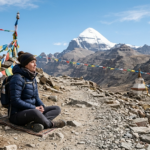
Mindful Trip to Mount Kailash