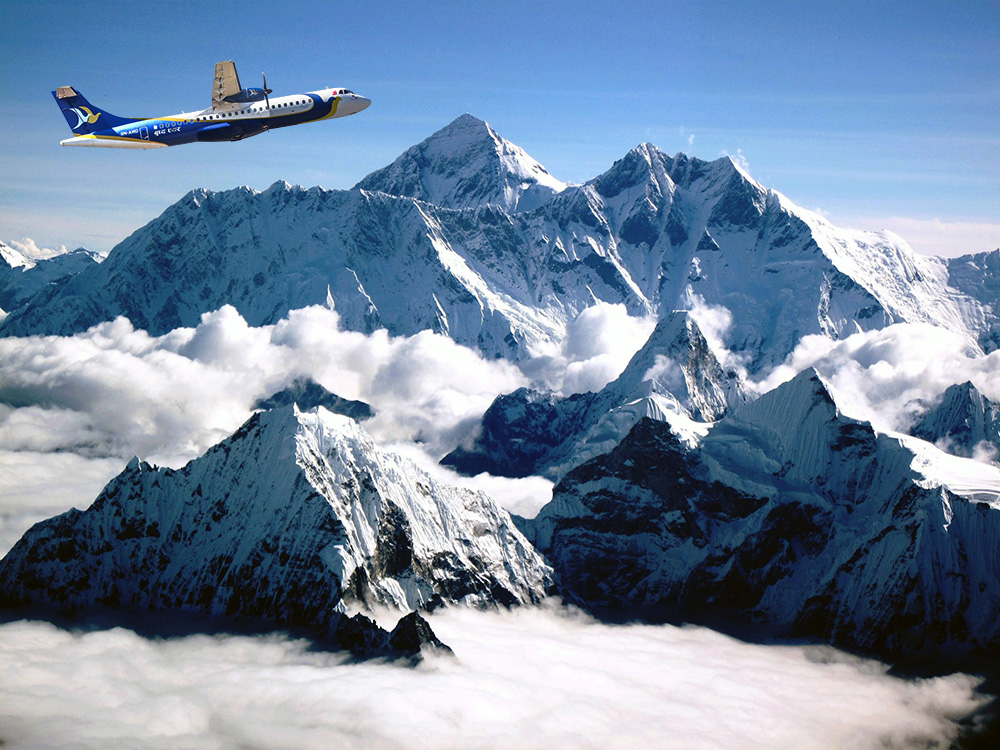

Kailash Tour with Everest Base Camp
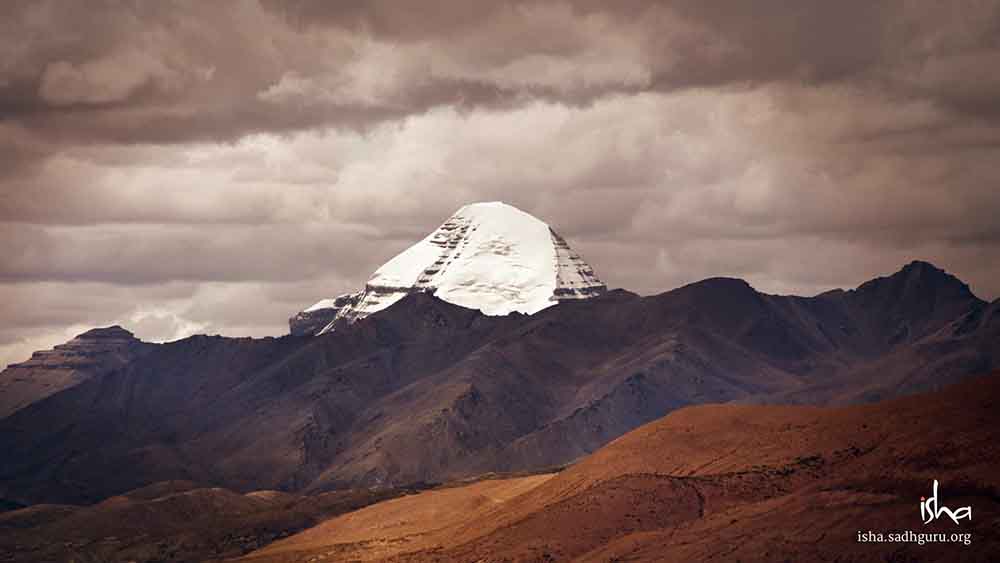
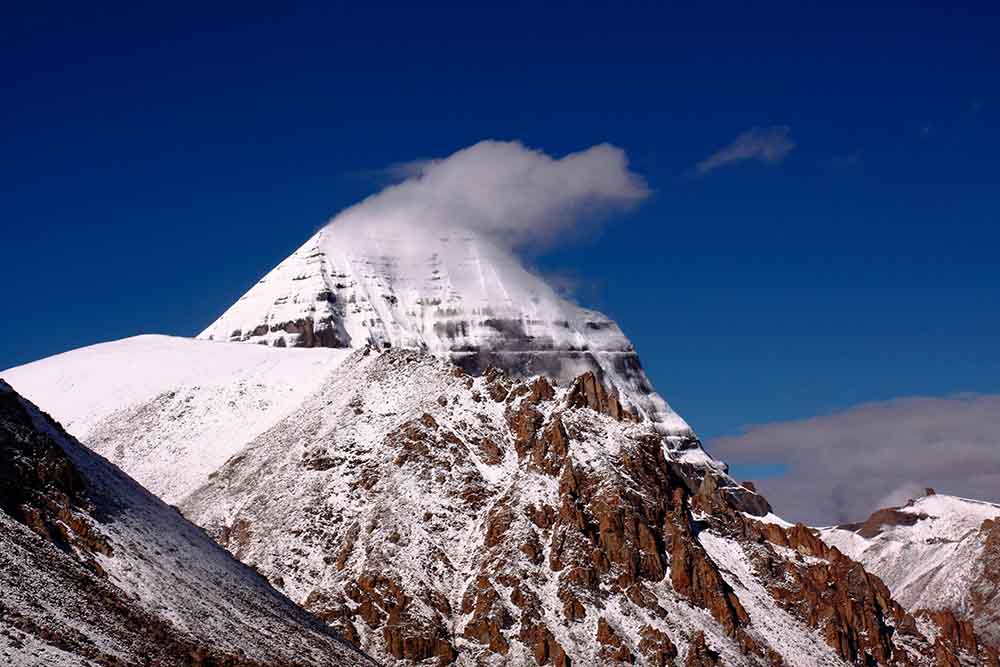
Kailash Tour with Everest Base Camp – A Journey of Spiritual Discovery and Himalayan Grandeur.
The Kailash Tour with Everest Base Camp covers 16 days and 2,800+ kilometres across Tibet from the holy city of Lhasa to the roof of the world at Everest’s North Face (5,200 m), then deeper into the western plateau to circumnavigate Mount Kailash at 6,638 m. No other single itinerary combines both destinations.
This isn’t two separate trips bolted together. The route flows naturally west from Lhasa along the Friendship Highway past Yamdrok Lake, Gyantse, and Shigatse before detouring south to Rongbuk Monastery (5,000 m) and Everest Base Camp, then continuing along the Tibetan Plateau to Lake Manasarovar (4,556 m) and Darchen. Three days of Kailash Parikrama follow, crossing Dolma La Pass at 5,620 m. It’s a single cohesive journey, not a compromise.
Most travelers can’t visit Kailash independently. Tibet is a restricted zone requiring a Tibet Travel Permit (TTP), Alien’s Travel Permit (PSB), Military/Border Permit, and Kailash/Ngari Area Permit all processed through a licensed operator. We handle every permit, guide, vehicle, and acclimatization day. You carry your pack; we carry everything else.
Short on time? Our Mount Kailash Helicopter Tour covers Kailash darshan and Manasarovar in 7 days.
What Makes This Combined Tour Different?
The north-side Everest Base Camp in Tibet is not the same experience as the EBC trek in Nepal. You arrive by vehicle via Rongbuk Monastery, then walk roughly 4 km to the glacier moraine at 5,200 m with the full north face of Everest Chomolungma directly in front of you. There are no teahouse queues, no crowds. The Tibetan side is rawer, quieter, and sits 164 m lower than the Nepal-side camp.
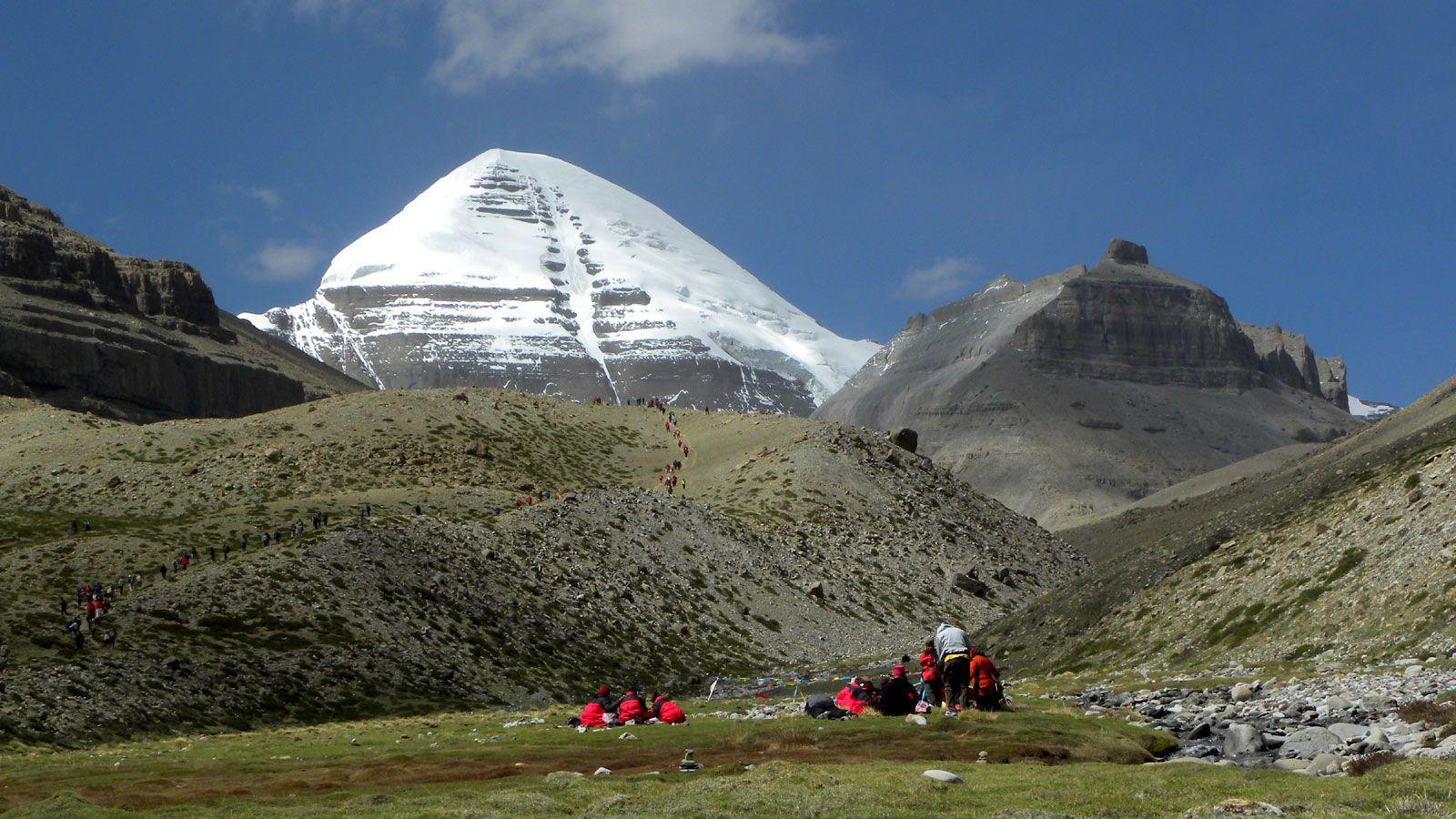
Pair that with the Kailash Parikrama 52 km over three days at altitudes between 4,690 m and 5,620 m and you have the most demanding, most rewarding circuit in the Himalayan world. Pilgrims from Hindu, Buddhist, Jain, and Bon traditions have circled Kailash for centuries. Completing it once is said to wipe out the sins of a lifetime. Completing it 108 times brings enlightenment. Most people aim for one.
Tour Highlights
- Everest North Face Base Camp at 5,200 m — vehicle access via Rongbuk Monastery, Tibet’s highest inhabited settlement
- Lake Manasarovar at 4,556 m — one of the world’s highest freshwater lakes, sacred in four religions
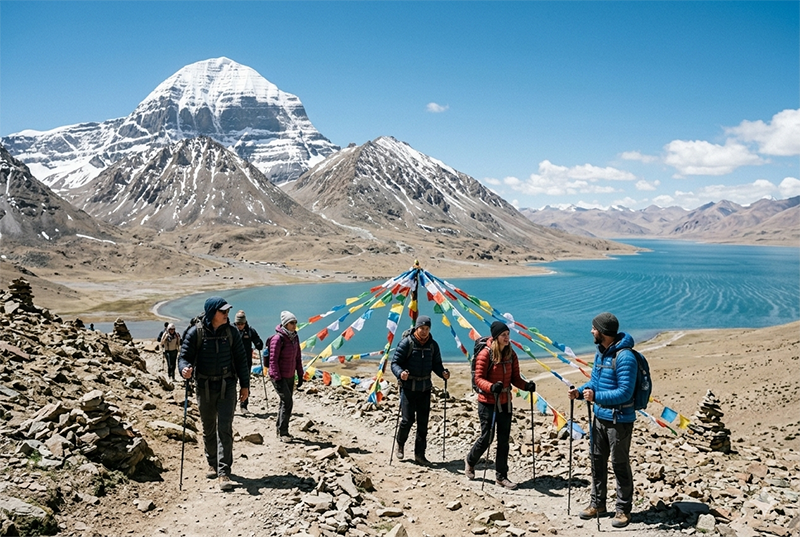
- Kailash Parikrama (Kora): 52 km over 3 days, max altitude 5,620 m at Dolma La Pass
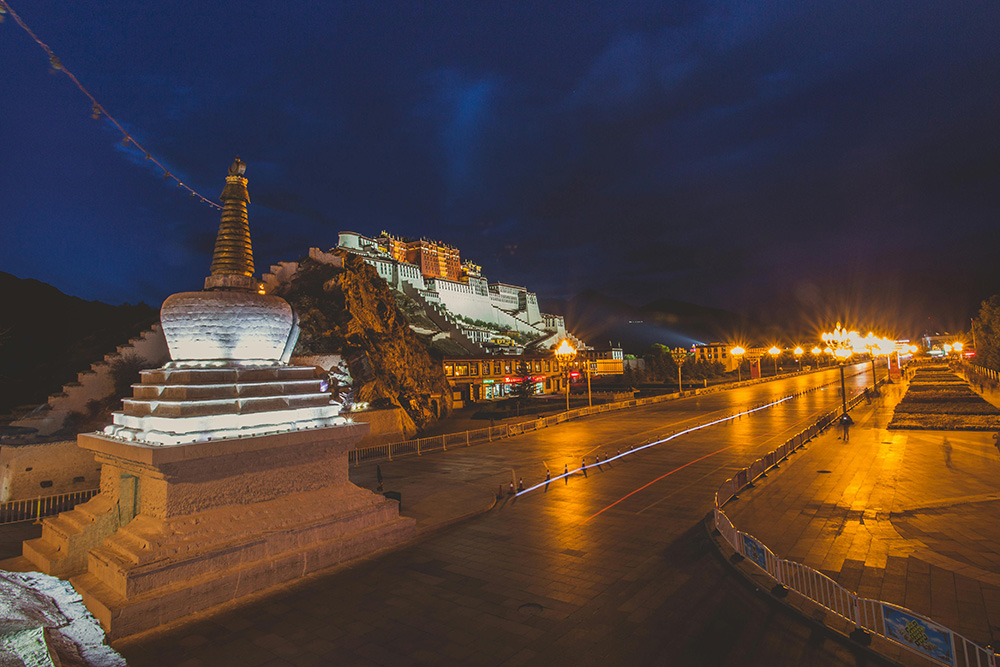
- Lhasa cultural tour: Potala Palace (UNESCO World Heritage Site), Jokhang Temple, Barkhor Street market
- Sera Monastery monk debates — one of Tibet’s last active debating traditions
- Yamdrok Lake from Kamba La Pass (4,802 m) — turquoise glacial lake stretching 72 km
Karo La Pass (5,052 m) with its hanging glacier visible from the road - Gaurikund Lake — the sacred ‘ocean of compassion’ near Dolma La, visited during the Kora
Best Time to Join the Kailash Tour with Everest Base Camp
| Month | Conditions | Recommendation |
| January–February | Tibet road closures likely; extreme cold (-20°C at Kailash) | Not recommended |
| March–April | Roads reopening; unpredictable weather; fewer pilgrims | Possible but challenging |
| May | Pre-monsoon; stable weather; Saga Dawa festival preparation | ✓ Very Good — ideal for avoiding crowds |
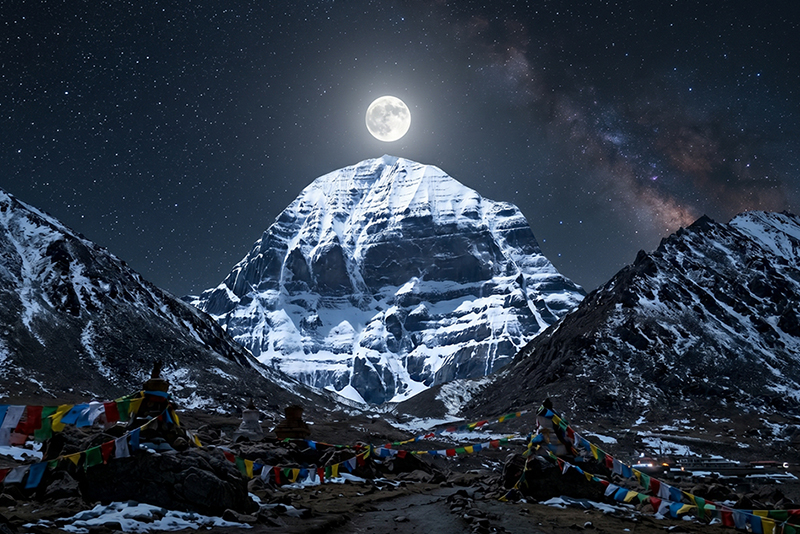
| June | Peak season; Saga Dawa festival (full moon); warm days at altitude | ✓ Excellent — best spiritual atmosphere |
| July–August | Monsoon affects Nepal but Tibet stays drier; some road disruptions | ✓ Good — mostly stable |
| September–October | Post-monsoon clarity; crisp air; clear Everest views | ✓ Excellent — best for photography |
| November | Cooling fast; late season; some operators close | Possible with preparation |
| December | Road closures begin; harsh conditions throughout | Not recommended |
Travelers who want to time their Kora with the most sacred Buddhist observance can book our dedicated Saga Dawa Festival Tour.
Permits Required for This Tour
Tibet is a restricted zone. Independent travel is not permitted for most foreign nationals. Every traveler on this tour requires:
- Tibet Travel Permit (TTP) — mandatory for all foreign travelers entering the Tibet Autonomous Region
- Alien’s Travel Permit (PSB) — required for areas outside Lhasa, including Shigatse and the Friendship Highway corridor
- Military/Border Permit — required for border zones and the Ngari region
- Kailash/Ngari Special Area Permit — enforced at multiple checkpoints along the western Tibet route
All permits are processed through us in Kathmandu before departure. Processing takes 4–7 working days. Indian nationals require additional documentation — contact us for current requirements.
If you prefer the classic overland route without the EBC addition, see our Mount Kailash Overland Tour for the standard 14-day circuit.’
Difficulty & Fitness Requirements
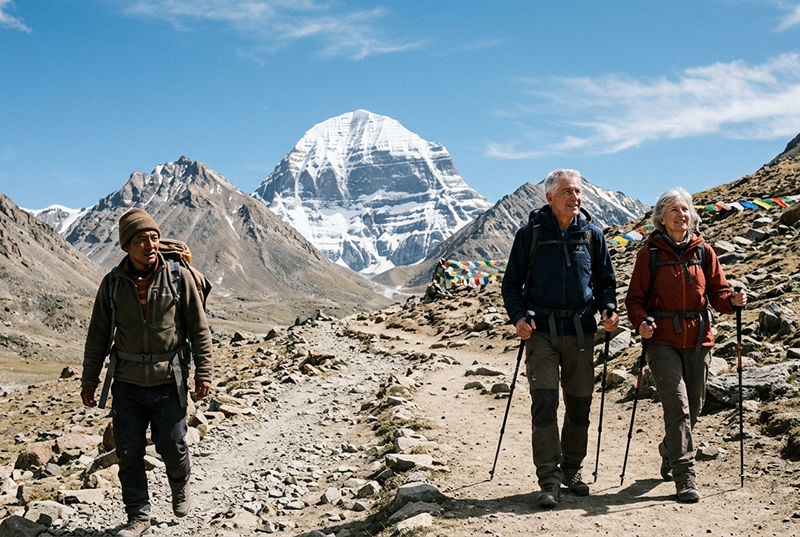
This is a demanding high-altitude journey, not a technical climb. The 3-day Kailash Kora at 4,690–5,620 m is the hardest section. You’ll walk 22 km on Day 2 of the Kora, gaining and losing 1,000 m over Dolma La Pass. No technical mountaineering skills are needed — but you need to be physically active, comfortable walking 5–8 hours per day, and prepared for altitude.
- Recommended fitness: able to walk 15 km per day with a light pack
- Age: generally suitable for healthy adults aged 18–70; we have guided pilgrims up to age on this route
- Altitude sickness: all participants acclimatize in Lhasa (3,656 m) for 3 days before continuing; oxygen and Diamox are available
- Horse/yak support: available during the Kora for baggage — porters and yaks included in the package
- Non-trekking alternative: pilgrims who cannot complete the Kora can participate in darshan from Darchen while the group completes the circuit
Older travelers or those concerned about fitness should also look at our Mount Kailash Trip for Seniors, designed with extra acclimatization days and horse support.
16-day Kailash Tour with Everest Base Camp
Day 01: Arrival in Kathmandu (1,355m)
Upon arrival in Kathmandu, transfer to your hotel and meet the tour team for a briefing about the upcoming Kailash and Everest Base Camp journey. The remainder of the day is free to rest or explore nearby temples and markets. This day allows travelers to recover from flights and prepare for the adventure ahead.
Day 02: Kathmandu Sightseeing and Spiritual Preparation (1,355m)
Visit Nepal’s most important Hindu and Buddhist pilgrimage sites, including Pashupatinath Temple, Guhyeshwari Mata Temple, Boudhanath Stupa, and Budhanilkantha. These sacred places offer spiritual preparation before the pilgrimage to Mount Kailash. The evening is reserved for final permit checks, packing, and trip orientation.
Day 03: Kathmandu to Timure (1,762m) – 160 km / 6-7 hrs
Drive north through the scenic Trishuli River Valley, passing terraced farms, traditional villages, and forested hills. As the road follows the Langtang region foothills, mountain views become increasingly impressive. Arrive at Timure near the Nepal-Tibet border and enjoy a peaceful evening before crossing into Tibet.
Day 04: Timure to Kerung (2,800m)
After completing immigration formalities, cross the border into Tibet and continue to Kerung. Surrounded by beautiful Himalayan peaks, Kerung provides an ideal location for initial acclimatization. Take a gentle walk around the town and nearby hills to help your body adjust gradually to the higher elevation.
Day 05: Kerung to Tingri (4,300m) – 370 km
Today’s journey climbs onto the vast Tibetan Plateau. Pass high mountain passes, wide valleys, yak pastures, and stunning landscapes. Weather permitting, enjoy distant views of Shishapangma and other Himalayan giants. A stop at the beautiful turquoise waters of Pelku Tso Lake adds another highlight before reaching Tingri.
Day 06: Tingri – Everest Base Camp – Rongbuk (4,980m) – 70 km
Drive to the world’s highest monastery at Rongbuk and continue to the Everest Base Camp viewpoint in Tibet at approximately 5,200m. Enjoy magnificent views of Mount Everest’s north face rising above the plateau. Spend time exploring the area before returning to Rongbuk for an unforgettable overnight stay.
Day 07: Rongbuk to Saga (4,600m) – 350 km
Leave the Everest region and travel west across the immense Tibetan Plateau. The route passes remote settlements, open grasslands, and spectacular Himalayan scenery. Snow-capped peaks frequently appear on the horizon while nomadic camps and grazing yak herds provide a glimpse into traditional Tibetan life.
Day 08: Saga to Lake Manasarovar (4,505m) – 420 km
Continue toward one of Asia’s most sacred pilgrimage destinations. After crossing vast plains and mountain passes, the holy waters of Lake Manasarovar appear beneath the shadow of Mount Kailash. Pilgrims regard the lake as a place of purification and spiritual renewal. Enjoy sunset beside the sacred shoreline.
Day 09: Explore Lake Manasarovar and Drive to Darchen (4,660m) – 53 km
Spend the morning exploring Lake Manasarovar, visiting lakeside viewpoints and, if possible, the historic Chiu Monastery perched above the water. Many pilgrims perform prayers, meditation, or ceremonial activities here. Later, drive to Darchen, the traditional starting point for the sacred Mount Kailash Kora.
Day 10: Darchen to Dirapuk (4,900m) – 18 km Trek
Begin the sacred Kailash Kora by trekking through the Lha Chu Valley. Colorful prayer flags, dramatic cliffs, and distant views of Mount Kailash accompany the route. As the trail gradually ascends, the mountain’s magnificent north face becomes increasingly visible. Overnight at Dirapuk with unforgettable views of Kailash.
Day 11: Dirapuk to Zutulpuk via Dolma La Pass (5,630m) – 20 km Trek
The most challenging and rewarding day of the pilgrimage begins with a steep ascent to Dolma La Pass, the highest point of the Kora. Prayer flags flutter across the pass while sacred Gauri Kund Lake lies below. Descend carefully through rugged terrain before reaching Zutulpuk Monastery for overnight rest.
Day 12: Zutulpuk to New Dongba (4,430m)
Complete the final section of the Kailash circuit with a gentle walk back to the vehicle point near Darchen. After successfully finishing the sacred Kora, continue by vehicle toward New Dongba. The day’s journey offers time to reflect on the spiritual significance and achievement of completing Kailash Parikrama.
Day 13: New Dongba to Saga (4,600m) – 435 km
Travel eastward across Tibet’s vast landscapes, passing broad valleys, high-altitude lakes, and remote grazing areas. The route provides additional opportunities to observe Tibetan nomadic culture and admire the dramatic scenery of western Tibet. Arrive in Saga for a comfortable overnight stay and well-earned rest.
Day 14: Saga to Kerung (2,800m) – 420 km
Continue toward the Nepal border through spectacular mountain scenery and river valleys. As the altitude gradually decreases, many travelers feel noticeably stronger and more comfortable. Enjoy one final evening in Tibet while reflecting on the remarkable experiences at Everest Base Camp, Manasarovar, and Mount Kailash.
Day 15: Kerung to Kathmandu (1,355m) – 165 km
Cross the border back into Nepal and descend through lush green hills, waterfalls, and traditional villages. The contrast between Tibet’s high plateau and Nepal’s fertile valleys becomes immediately apparent. Arrive in Kathmandu and enjoy a comfortable hotel stay, celebrating the successful completion of the pilgrimage.
Day 16: Departure from Nepal
Following breakfast, transfer to the airport for your international departure. Carry home unforgettable memories of the sacred Mount Kailash pilgrimage, the peaceful shores of Lake Manasarovar, and breathtaking views from the Tibetan side of Everest Base Camp. The journey concludes, but its spiritual and cultural impact often lasts a lifetime.
Frequently Asked Questions
1. How is the Tibetan Everest Base Camp different from the Nepal-side EBC?
The Tibet-side (North Face) base camp sits at 5,200 m and is accessible by road to within 4 km of the glacier. You walk from Rongbuk Monastery — the world’s highest monastery — to the moraine and get a direct view up the north ridge where Mallory and Irvine attempted their 1924 summit. The Nepal-side EBC at 5,364 m requires an 8–12 day trek from Lukla. The Tibet approach is less crowded and involves far less hiking — making it ideal as a combined itinerary with the Kailash Kora, which is already physically demanding.
2. How difficult is the Kailash Kora? Do I need trekking experience?
The Kailash Parikrama covers 52 km over three days, reaching a maximum altitude of 5,620 m at Dolma La Pass on Day 2. You don’t need mountaineering experience, but you need to be physically active and comfortable walking 6–9 hours per day on rough, high-altitude terrain. The ascent to Dolma La is steep (approximately 900 m gain from Dhirapuk at 4,720 m). Day 1 (13 km to Dhirapuk) is relatively gentle. Day 2 (22 km with the pass crossing) is the hardest. Day 3 (8 km descent to the road) is manageable. Yaks and porters carry your main luggage throughout — you’ll carry a daypack only.
3. What permits do I need, and how long does processing take?
Foreign nationals require four separate permits: Tibet Travel Permit (TTP), Alien’s Travel Permit (PSB), Military/Border Permit, and the Kailash/Ngari Special Area Permit. All are processed on your behalf in Kathmandu before departure — processing takes 4–7 working days. You must be in Kathmandu before permit processing begins; permits cannot be collected remotely. Indian nationals may require additional documentation based on current bilateral regulations. [OWNER TO CONFIRM: current processing timeline and 2026 requirements for Indian nationals]
4. What’s the best time of year to do this tour?
May–June and September–October are the two optimal windows. May through June gives you stable weather on the Tibetan Plateau, warmer daytime temperatures at altitude (5–15°C at Kailash), and the chance to witness the Saga Dawa festival (full moon in June) — the most sacred period of the Buddhist calendar, observed at Kailash. September and October bring post-monsoon clarity, excellent Everest views, and cooler but manageable conditions. July and August are possible — Tibet sits north of the main monsoon belt and stays drier than Nepal — but some road disruptions do occur. Winter months (December–March) see road closures on the plateau.
5. Can older travelers or people with health conditions join this tour?
Yes, with the right preparation and an honest pre-trip health assessment. We’ve supported pilgrims on similar Kailash routes aged [OWNER TO CONFIRM max age guided]. The key factors are cardiovascular health and the ability to acclimatize — not age alone. All participants spend 3 days acclimatizing in Lhasa before proceeding to higher altitudes. Oxygen cylinders, pulse oximeters, and Diamox (altitude medication) are available throughout the tour. Participants who cannot complete the Kailash Kora on foot can arrange horse or horseback support for the full circuit, or observe from Darchen. We require participants with pre-existing cardiac, pulmonary, or severe blood pressure conditions to get medical clearance before booking.
6. What is the total distance of this 18-day tour?
The full overland route from Lhasa to Kailash and back covers approximately 2,800 km by road, plus 52 km of trekking during the Kailash Kora. Key road segments: Lhasa to Gyantse (264 km via Kamba La), Gyantse to Shigatse (98 km), Shigatse to Everest Base Camp (336 km), EBC to Saga (299 km), Saga to Manasarovar (545 km). The return leg from Darchen back through Shigatse to Lhasa covers approximately 778 km.
7. Is this tour suitable for non-Hindu travelers?
Completely. Mount Kailash is sacred in four traditions — Hinduism, Tibetan Buddhism, Jainism, and Bon — and the Kailash Kora is walked by pilgrims and non-religious hikers alike. Lake Manasarovar carries spiritual significance across all four, but there’s no requirement to participate in rituals. Most international travelers join for the combination of high-altitude adventure, Tibetan culture, and the sheer remoteness of the western plateau. The Lhasa cultural program (Potala Palace, Sera Monastery debates, Jokhang Temple) is equally compelling regardless of religious background.
Book your Kailash Tour with Everest Base Camp today and embrace a life-changing journey through the heart of the Himalayas.
- Accommodation in Kathmandu (twin/triple sharing).
- Guesthouse/lodge accommodation during Tibet/Kailash portion.
- All rooms on shared basis unless private room supplement is requested.
- All vegetarian meals as per itinerary (B – Breakfast, L – Lunch, D – Dinner).
- Packed or hot meals during Kailash Parikrama and remote areas.
- Mineral water or boiled drinking water provided daily.
- Airport transfers in Kathmandu.
- Private vehicle throughout the trip.
- Experienced English/Hindi speaking guide.
- Support crew, cook, and helpers throughout the trip.
- Oxygen cylinders and basic first aid kit for high altitude safety.
- Tibet Travel Permit.
- Mount Kailash Entry Permit.
- Restricted Area Permit and Environment Conservation Fees.
- All necessary border formalities and documentation assistance.
- Guided Kathmandu sightseeing tour including entry fees (Pashupatinath, Guhyeshwari, Jal Narayan).
- Manasarovar Lake exploration.
- Parikrama (circumambulation) of Mount Kailash by foot.
- Down jacket.
- Duffle bag for packing.
- Sleeping bag (on returnable basis).
- Basic travel insurance for Nepal side (check with your agent).
- Pick-up and drop-off at Kathmandu airport on arrival/departure.
- Personal expenses like shopping, snacks, and laundry in Nepal and Tibet.
- Travel insurance and emergency rescue (if needed during the tour).
- Bar bills, soft drinks, and alcoholic beverages.
- Tips for guides, drivers, and support staff.
- Extra cost for rescue jeep if someone returns early from the Kailash tour.
- Additional expenses due to landslides, roadblocks, or other natural problems.
- Nepal visa fee and re-entry visa if leaving and coming back.
- International phone calls, mobile data, and roaming charges.
- Personal clothing, shoes, or gear needed for trekking or walking.

Inquiry this trip
You might also like...



Top Add-on Trips
Muktinath Overland Tour
Halesi Mahadev Tour