
Kailash Tour for Nepali Citizen
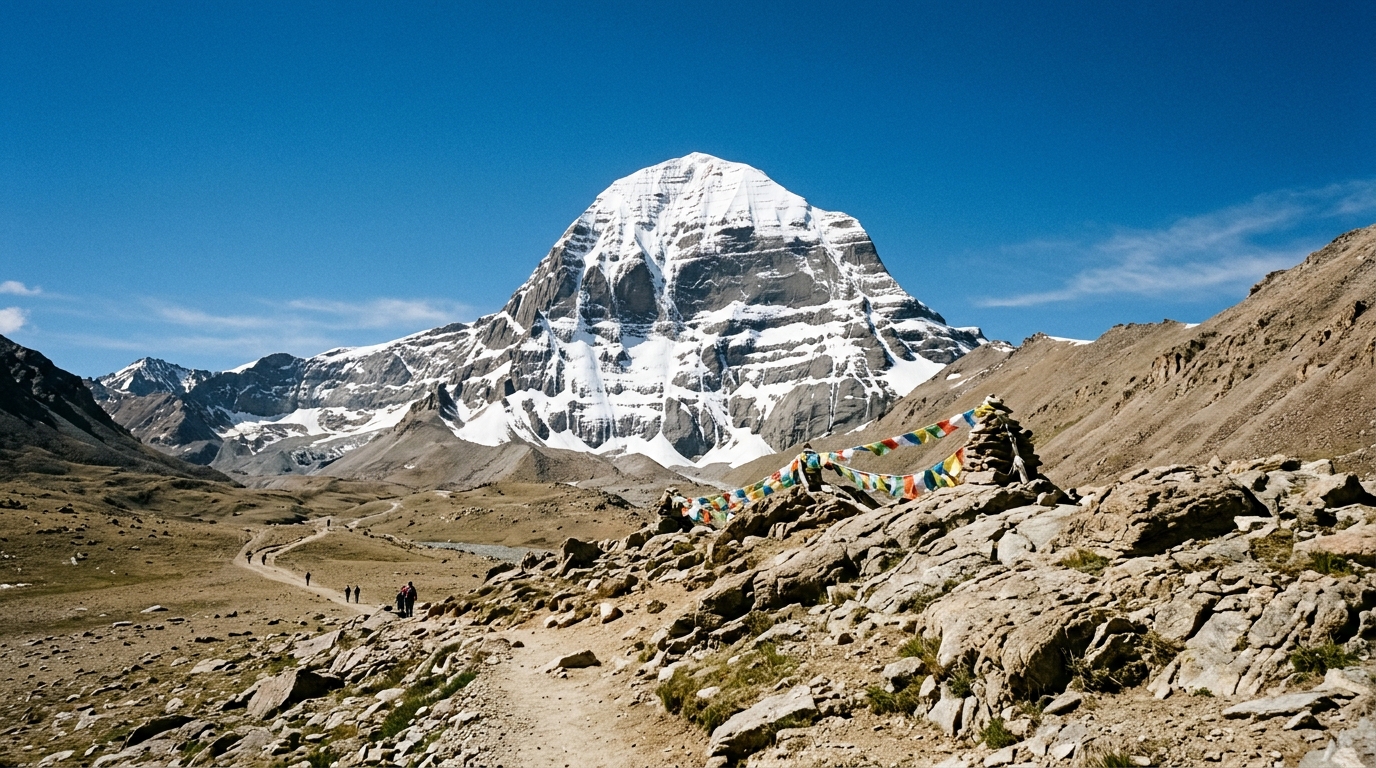
Mount Kailash (6,638 m) stands in the Ngari Prefecture of the Tibet Autonomous Region as the holiest mountain on earth for an estimated two billion people across four faiths. For Nepali citizens, it is also the most accessible — geographically, logistically, and spiritually. Nepal shares a border with Tibet at Rasuwagadhi, making the Kyirong crossing the shortest overland route to Kailash in the world. No other nationality starts this journey closer to the mountain.
This guide covers everything a Nepali passport holder needs to know for 2026: documents, routes, costs, permits, the Kailash Parikrama, and how to book. Figures and requirements are updated for the current season.
Why Nepali Citizens Have a Unique Advantage for Kailash Yatra
Nepali citizens get to Kailash faster and at lower cost than almost every other nationality. Three key advantages apply specifically to a Nepali passport holder:
No individual Chinese tourist visa required. Unlike travelers from most countries, Nepali citizens traveling to Kailash do not need to apply for a standard individual Chinese visa. The Chinese Group Visa is processed directly by a licensed tour operator in Kathmandu through the Chinese Embassy — you submit documents to your operator, not to the embassy yourself. No interview is required.
Geographic proximity. The Kyirong border crossing at Rasuwagadhi is approximately 130 km from Kathmandu by road — a 5–6 hour drive. No flights. No transit through a third country. You are on Tibetan soil the same day you leave Kathmandu.
Why Mount Kailash Is Sacred — The Four Religious Traditions
Mount Kailash is not sacred to one religion — it is the holiest peak across four distinct traditions, which is what makes the pilgrimage unusual. Each tradition has a different name and interpretation of the mountain, yet all regard it as the axis of the universe:
Hinduism: Kailash is the abode of Lord Shiva and Parvati. The mountain’s south face resembles a natural Shivalinga. Lake Manasarovar at its base is the lake of the mind, created by Brahma. Every Nepali Hindu pilgrim considers a holy dip in Manasarovar among the most spiritually significant acts of a lifetime.
Tibetan Buddhism: Kailash is Kangrinpoche — ‘Precious Snow Mountain’ — and is identified with Mount Meru, the cosmic axis of Buddhist cosmology. Milarepa, Tibet’s great poet-saint, is said to have meditated in a cave on the mountain’s slopes.
Jainism: Kailash is identified as Mount Ashtapada, the site where Rishabhdev (Adinath) — the first Tirthankara — attained liberation. Jain pilgrims who complete the Kora are said to reach a state of purity aligned with the first path to moksha.
Bon: The ancient pre-Buddhist spiritual tradition of Tibet regards Kailash as Tisé — the seat of the sky-goddess and the source of all spiritual power. Bon pilgrims circumambulate the mountain counter-clockwise, opposite to Buddhist and Hindu pilgrims.
Route Options — Overland vs Helicopter from Nepal
Route 1 — Overland via Kyirong (Rasuwagadhi), 13–15 Days
This is the most popular and economical route for Nepali citizens. The journey starts with a road drive from Kathmandu to Timure (the last Nepali village before the border), crossing into Tibet at Kyirong Gadhi/Friendship Bridge. From Kyirong town you proceed by vehicle across the plateau: Kyirong (2,800 m) → Saga (4,500 m) → Lake Manasarovar (4,556 m) → Darchen (4,690 m) → Kailash Kora (3 days).
Advantages: gradual altitude gain reduces altitude sickness risk; more time at sacred sites; economical cost; open to all age groups with good health. Best for: first-time pilgrims, those on a budget, and pilgrims who want maximum time at Manasarovar and Kailash.
See our Mount Kailash Overland Tour for full itinerary and 2027 departures.
Route 2 — Helicopter via Simikot-Hilsa, 9–11 Days
The helicopter route flies from Kathmandu to Nepalgunj, then by fixed-wing aircraft to Simikot in Humla district, then by helicopter to Hilsa on the Nepal-Tibet border. On the Tibet side, vehicles take you from Taklakot (Purang) to Manasarovar and Darchen. This route reduces total travel days significantly but at substantially higher cost.
Advantages: shorter duration (suitable for those with limited leave); aerial Himalayan views; avoids long road days through the plateau. Best for: pilgrims who are time-constrained, senior citizens, or those who prefer less road travel.
See our Mount Kailash Helicopter Tour for helicopter package details and pricing.
Documents & Permits for Nepali Passport Holders
Tibet is a restricted zone. Individual travel is not permitted — all pilgrims must travel through a licensed tour operator. For Nepali citizens, the following documents are required:
Nepali Passport — valid for at least 6 months from the travel date. Passport photographs (4, colour, white background). Some operators accept a national identity card in place of a passport for Nepali nationals — confirm with your operator before booking.
Chinese Group Visa — processed by your licensed tour operator through the Chinese Embassy in Kathmandu. This is a group visa, not an individual Chinese tourist visa. It is valid only for the Kailash pilgrimage period and only for entry through the Nepal-Tibet border. Processing takes 4–7 working days.
Tibet Travel Permit (TTP) — issued by the Tibet Tourism Bureau; arranged by the tour operator alongside the group visa.
Alien’s Travel Permit (PSB) — required for travel outside Lhasa into restricted areas; covers the entire Kailash route.
Military/Border Area Permit — required for the Ngari region (western Tibet), which includes the Kailash and Manasarovar area.
Kailash/Ngari Special Area Permit — a separate environment and conservation permit specifically for the Kailash holy land; enforced at checkpoints from Saga onwards.
Important: Tibet regulations require a minimum group size of 5 persons for the Chinese Group Visa to be issued. Solo travel is not permitted under any circumstance. Your operator will either arrange you within an existing group or form a dedicated group if you are travelling with fewer than 5 people.
All permits are handled entirely by your operator in Kathmandu. You do not visit the Chinese Embassy yourself. Submit your passport or ID and photographs to your operator at least 10–14 days before departure to avoid delays.
For a full permit guide covering all routes, see our article on Required Permits for Mount Kailash Trip by Route.
Kailash Tour Cost for Nepali Citizens in 2027
Kailash tour prices in 2027 are higher than in previous years due to new Chinese Foreign Exchange Center (FEC) requirements placed on Nepal-based operators and AKTON (Association of Kailash Tour Operators Nepal) price floors designed to prevent undercutting. The price floors protect pilgrims from substandard operators. Current indicative ranges.
The Kailash Parikrama — A 52 km Sacred Circuit
The Kailash Parikrama (also called the Kora) is a 52 km circumambulation of Mount Kailash completed over three days on foot. It is the spiritual centrepiece of the entire journey. Every Hindu pilgrim who circles the mountain once is believed to wash away the accumulated karma of a full lifetime. Completing 108 Koras is said to bring liberation from the cycle of rebirth. Most pilgrims complete one.
Day 1 of the Kora — Darchen to Dirapuk Monastery (13 km, 5–6 hours). The trail begins at Yama Dwar — the symbolic ‘gateway of death and rebirth’ — and passes through the Lha Chu valley along the west and north faces of Kailash. The north face direct view from Dirapuk at 4,720 m is considered one of the most powerful sacred sightings on earth. Horse and porter support is available from Yama Dwar for those who need it.
Day 2 of the Kora — Dirapuk to Zutulphuk via Dolma La Pass (22 km, 9–10 hours). This is the hardest day. The ascent to Dolma La Pass at 5,620 m involves a steep 900 m climb from Dirapuk. At the pass, pilgrims leave an offering and move through what is regarded as the most sacred single point of the entire pilgrimage. The descent to Gaurikund Lake — the ‘ocean of compassion’ — and on to Zutulphuk Monastery follows.
Day 3 of the Kora — Zutulphuk to Darchen (8 km, 3 hours). The final leg passes the Zutulphuk Monastery — said to be the cave where Milarepa defeated the Bon shaman Naro Bonchung in a magical contest — and descends back to the vehicles at Darchen.
Best Time for Kailash Yatra from Nepal
The Kailash pilgrimage season runs from May to October. The two peak windows are May–June and September–October.
May and June bring stable weather on the Tibetan Plateau with daytime temperatures of 10–18°C at Darchen. June is also the month of Saga Dawa — the full moon festival that marks the birth, enlightenment, and death of the Buddha. Completing the Kora during Saga Dawa is believed to multiply the merit of the circumambulation by up to 1,000 times. Permits for June dates fill first — book by February.
September and October offer post-monsoon clarity, excellent views of the south face of Kailash, and cooler conditions (5–15°C). Roads are dry and stable. This is the best window for photography and for pilgrims sensitive to the heat of early summer.
Avoid July for the overland route if possible — monsoon rain affects the Nepal-side roads between Kathmandu and Rasuwagadhi, and some plateau sections can experience flooding. Tibet itself stays drier than Nepal in monsoon but road conditions near the border can be difficult. November to April: border crossings close and tours do not operate.
For the auspicious June full moon, book a seat on our fixed-departure Mount Kailash Saga Dawa Festival Tour.
Health, Fitness & Altitude Preparation
Most of the Kailash route sits above 4,000 m. Darchen is at 4,690 m and Dolma La Pass at 5,620 m. Altitude sickness (Acute Mountain Sickness or AMS) is a genuine risk, especially for pilgrims who live at lower elevations.
Physical preparation: start walking 30–45 minutes per day from at least 4 weeks before departure. Build to 60–90 minutes over hilly terrain. You do not need to be a trekker — but you need to be able to walk 8–10 hours on the Day 2 Kora without collapsing from basic fatigue.
Altitude medication: Diamox (acetazolamide) is the most commonly used altitude prophylactic. Consult your doctor before the trip. Do not self-medicate for the first time at 5,000 m.
Acclimatization is built into the itinerary: one full rest day in Saga (4,500 m) before proceeding to Manasarovar and Kailash. Do not skip it. Oxygen cylinders and a basic first aid kit are carried by the support crew throughout.
Age eligibility: pilgrims between ages 18 and 70 are generally eligible. Some operators have successfully guided pilgrims older than 70 with medical clearance and horse/porter support on the Kora. Minimum age for Kailash tour is typically 18 years.
Senior Nepali pilgrims should also review our dedicated Mount Kailash Trip for Seniors page — designed with extra acclimatization and horse support.
Spiritual Experiences Along the Way
Pashupatinath Temple, Kathmandu — the journey traditionally begins here, at Nepal’s most sacred Shiva temple and a UNESCO World Heritage Site. Evening aarti on the banks of the Bagmati is both a ritual beginning and an emotional anchor for what lies ahead.
Lake Manasarovar at 4,556 m — a sacred bath in these glacial waters is believed to cleanse the sins of all past lives. Circumambulating the lake clockwise is standard practice. Chiu Gompa Monastery on the western shore has a cave associated with Guru Rinpoche (Padmasambhava) and overlooks both the lake and the south face of Kailash simultaneously.
Yama Dwar — ‘Gate of the God of Death’ — at the base of the Kora is where pilgrims symbolically leave behind their old self before beginning the circumambulation. Many prostrate and offer prayers here before setting foot on the Parikrama trail.
Dirapuk Monastery — directly north of the Kailash summit pyramid. The north face view from here is the closest most pilgrims will ever get to the mountain. The silence is extraordinary — even in a group of 20 people.
Dolma La Pass — 5,620 m. Pilgrims tie prayer flags, leave offerings, and often experience a profound emotional response at this point. For many it is the transformative moment of the entire pilgrimage. The crossing takes 2–3 hours from Dirapuk at altitude.
Why Book Through a Licensed Nepal Tour Operator
Solo travel to Kailash is not legally permitted. Tibet’s regulations require all foreign nationals, including Nepali passport holders, to travel as part of an organized group through a licensed operator. Independent travel into the Tibet Autonomous Region is prohibited and enforced at multiple checkpoints.
Choose an operator registered with TAAN (Trekking Agencies’ Association of Nepal) and a member of AKTON (Association of Kailash Tour Operators Nepal) — the regulatory body that oversees quality and pricing standards for Kailash tours from Nepal. AKTON membership means the operator follows government-set minimum price floors and maintains accountability standards. We at Mount Kailash Trip are.
A licensed operator handles: Chinese Group Visa and all four Tibet permits; all border documentation; experienced English/Nepali guide; Tibetan local guide throughout Tibet; vehicle transport in both Nepal and Tibet; accommodation from Kathmandu to Darchen and back; emergency oxygen support; horse and porter arrangements for the Kora.
Start Your Kailash Yatra from Kathmandu — Inquire Today
Departures for the 2027 season are open now. Permit processing windows for May and June full moon dates fill early — seats are limited by group visa quota. If you are planning a May or June departure, submit your documents by March at the latest.
We offer the Kailash Overland Tour (13–15 days from Kathmandu via Kyirong), the Mount Kailash Helicopter Tour (9–11 days via Simikot-Hilsa), and private group departures for families, senior pilgrims, and corporate groups.
FAQ — Kailash Yatra for Nepali People
1. Does a Nepali citizen need a Chinese visa to go to Mount Kailash?
Nepali citizens do not need to apply for a standard individual Chinese tourist visa. Instead, a Chinese Group Visa is processed by your licensed tour operator through the Chinese Embassy in Kathmandu. You submit your passport and photographs to your operator — no embassy appointment is needed. The group visa is valid only for the Kailash pilgrimage period and the Nepal-Tibet border entry point. Processing takes 4–7 working days.
2. Can I use my national identity card instead of a passport for the Kailash tour?
Some operators accept a valid Nepali national identity card for citizens traveling to Kailash. However, requirements can change based on Chinese Embassy policy updates. The safest approach is to use a valid Nepali passport with at least 6 months of remaining validity from your travel date. Confirm with your operator at the time of booking which documents they currently accept for Nepali nationals.
3. What is the minimum group size for a Kailash tour?
Tibet regulations require a minimum of 5 persons for a Chinese Group Visa to be issued. If you are travelling alone or with fewer than 5 people, your operator will either add you to an existing scheduled group departure or aggregate you with other pilgrims to meet the minimum. True solo independent travel to Kailash is not permitted under any circumstance.
4. How much does the Kailash tour cost for Nepali citizens in 2027?
The overland route via Kyirong (13–15 days) typically costs NPR 380,000 to NPR 550,000 per person for Nepali citizens in 2027. The helicopter route via Simikot-Hilsa (9–11 days) runs NPR 650,000 to NPR 900,000. Prices are higher in 2026 than previous years due to AKTON-regulated price floors and Chinese FEC requirements placed on Nepali operators. Personal expenses, travel insurance, and tips are separate.
5. When should I book to get the best dates?
For May and June departures — especially around the Saga Dawa full moon — book by January or February at the latest. Permits for peak dates are issued in limited batches and fill on a first-come, first-served basis. September and October dates are less competitive but still benefit from early booking. Submitting your passport for permit processing should happen at least 14 days before departure.
6. Is the Kailash Kora mandatory? Can I do darshan without the trek?
The Kailash Parikrama (Kora) is not legally mandatory, but it is the spiritual centrepiece of the journey and all standard packages include it. Pilgrims who cannot complete the 52 km on foot can arrange horse support for the full Kora or partial sections, particularly the Day 2 ascent to Dolma La Pass. Pilgrims with significant mobility limitations can observe Kailash darshan from Darchen without completing the circumambulation. Inform your operator in advance so appropriate arrangements can be made.
7. Are senior citizens eligible for the Kailash tour?
Nepali pilgrims up to age 70 are generally eligible with good health. Some operators have guided pilgrims older with medical clearance and full horse and porter support on the Kora. A medical fitness certificate from a doctor is recommended for all pilgrims above 60. The acclimatization day in Saga and the slower pace of the overland route make this itinerary manageable for healthy seniors. Consult your doctor before booking and inform your operator of any pre-existing conditions.
8. What happens if I get altitude sickness on the tour?
Altitude sickness is a real possibility above 4,000 m. Your licensed operator carries supplementary oxygen cylinders and a basic first aid kit throughout the tour. The guide monitors all participants daily for symptoms including persistent headache, nausea, loss of appetite, and breathlessness at rest. If a participant develops serious AMS, the standard protocol is descent to a lower altitude immediately. Rescue vehicles are arranged when needed. This is one of the primary reasons why Kailash tours must be conducted through licensed operators with experienced, trained guides.
9. Can I do the Kailash tour during the Saga Dawa festival?
Yes, and it is considered the most auspicious time to complete the Kora. Saga Dawa is observed on the full moon of the fourth Tibetan lunar month, which typically falls in June. Completing the Kora during Saga Dawa is believed by Tibetan Buddhists to multiply the spiritual merit of the circumambulation by 1,000 times. The festival also brings thousands of pilgrims from across Tibet and Nepal to Darchen — making it a deeply communal and vibrant experience. Book early: June permits are the first to fill each season.
10. Which Kailash tour package is best for Nepali citizens — overland or helicopter?
The overland route via Kyirong is better for most Nepali pilgrims: lower cost, gradual altitude gain (reducing sickness risk), more time at Manasarovar and Kailash, and a richer experience of the Tibetan Plateau landscape. The helicopter route suits pilgrims who are time-constrained, physically less mobile, or willing to pay more for a shorter journey. If you have 14–15 days available and are in reasonable health, the overland route is the recommended choice.
Recent Posts
Mount Kailash Kora Distance and Difficulty
Where Is Mount Kailash Located?
Common Visa Mistakes for Mount Kailash Trip
Kailash Yatra Permit Processing Time from Kathmandu
Required Permits for Mount Kailash Trip by Route
Do You Need a Visa for Mount Kailash Trip
Visa for Mount Kailash Trip
Age Limit for Mount Kailash Yatra
Mindful Trip to Mount Kailash