
How to Prepare Your Trip to Mount Kailash
Planning a trip to Mount Kailash is a unique undertaking — part pilgrimage, part adventure — and careful preparation will make the difference between a challenging ordeal and a deeply rewarding journey. This guide draws on multiple expert sources to help you get ready physically, logistically, mentally and spiritually.
Why This Trip Needs Special Preparation
-
Mount Kailash lies at high altitude (often above 4,500 m / ~15,000 ft) and the classic kora (circumambulation) around the mountain involves trekking over rough terrain.
-
It’s located in a remote part of the Tibetan plateau with limited infrastructure.
-
Travel requires special permits (for Tibet, restricted areas) and travel logistics are more complicated than typical trips. Because of the harsh conditions, altitude sickness, weather changes, physical exertion and cultural sensitivity all matter.
Because of these factors, preparation is key: the right training, gear, mindset and logistics will help you enjoy the journey safely and meaningfully.
Pre-Trip Planning Checklist
1. Choose your route, duration & season
-
The best time to visit is May–June and September–October, when weather is most favorable.
-
Decide whether you’ll travel via Nepal (Kathmandu → border) or via China/Tibet (Lhasa, etc.). Each has pros & cons.
-
Choose duration: Many tours last 10-17 days depending on entry point, acclimatisation and how many days you allocate to the kora trek.
2. Documents & permits
-
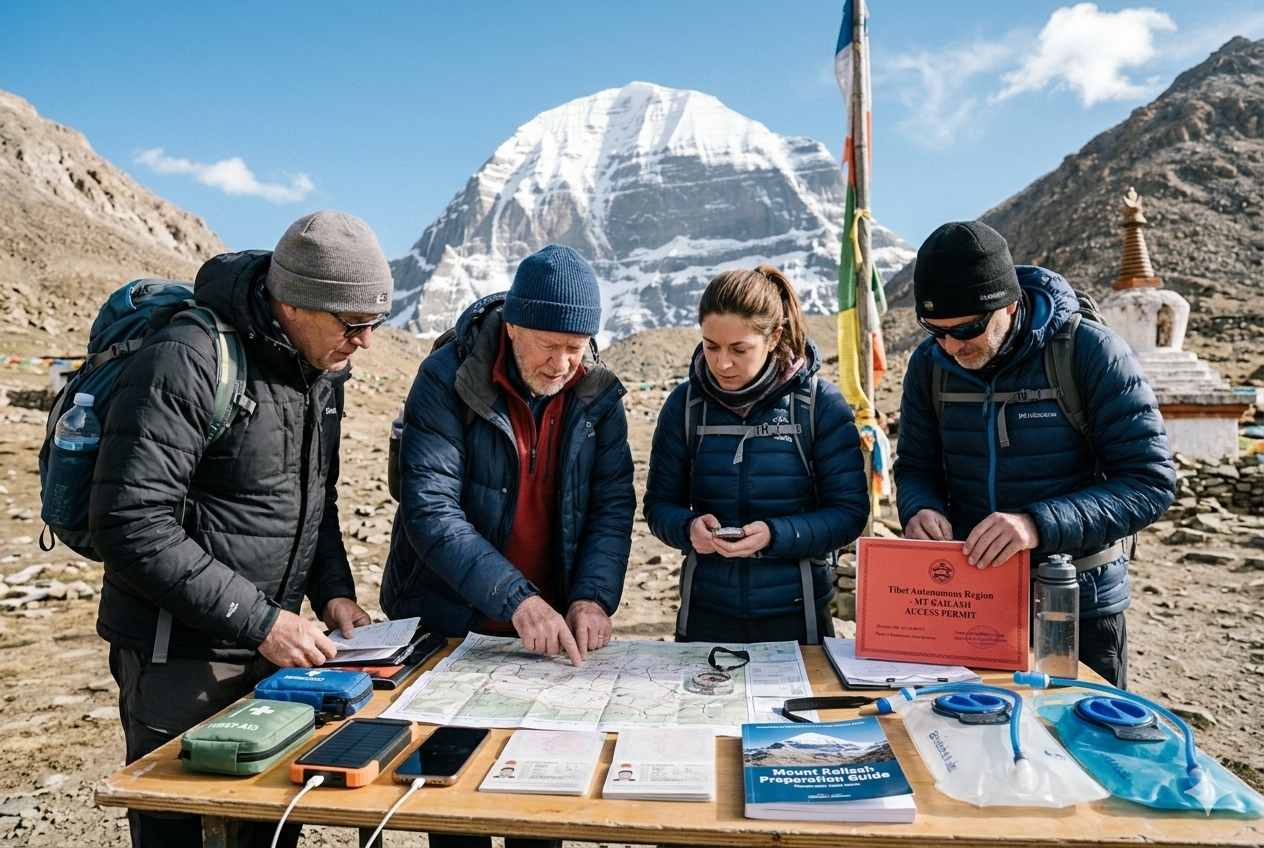
Chinese Tourist Visa (for travellers entering via China) and the Tibet Travel Permit are essential.
-
For the region around Mount Kailash you may need extra permits: Alien’s Travel Permit, Military Area Permit, etc.
-
Make sure your passport is valid (many suggest 6+ months) and that you apply for documents well in advance.
-
Coordinate your operator: Since self-travel isn’t permitted in many parts of Tibet, a licensed tour operator is critical.
3. Health & fitness
-
Get a medical check-up to assess fitness, especially if you have any heart, lung or other medical concerns.
-
Undertake a fitness regime some weeks/months ahead: cardio (walking, jogging), strength training (legs, core), and ideally altitude-training if possible.
-
Acclimatisation matters: plan for gradual ascent, rest days, and recognise signs of altitude sickness (headache, dizziness, breathlessness).
4. Gear & packing list
Your gear will make a big difference. Key items include:
-
Layers of clothing: base layer (moisture wicking), mid-layer (fleece), outer shell (wind & waterproof). Nights/dawn are cold.
-
Good trekking/hiking boots (sturdy sole, ankle support).
-
Warm gloves, hat/beanie, good quality socks.
-
Sunglasses (UV protection), sunscreen (high altitude = stronger sun).
-
Day-pack for the kora trek; water bottle; power bank; snacks (energy bars, dried fruits).
-
Sleeping bag (some guesthouses are basic) and perhaps a sleeping liner.
-
First-aid kit including altitude-meds (consult doctor), blister care, pain relief.
-
Documents: passport, permits, photocopies, travel insurance details.
5. Mental & spiritual readiness
-
This is more than a holiday — it’s a journey of meaning. Accept that parts may be uncomfortable (cold nights, remote lodgings, long drives) and embrace the challenge.
-
Respect local culture and traditions: The region is sacred to Hindus, Buddhists, Jains and the Bon tradition. Being mentally prepared to engage with the spiritual side enriches the experience.
-
Be patient: delays due to weather, roads, permits can happen; a flexible mindset helps.
What to Expect on Route & Terrain
-
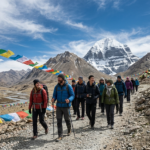
The trek around Mount Kailash (the kora/parikrama) covers ~50-55 km and is often done in 2-3 days. The altitude rises to over 5,600 m at Dolma La Pass.
-
Accommodation on the trek is basic: modest guesthouses or lodges, shared facilities, simple meals. Be prepared for fewer comforts.
-
Road travel: from Kathmandu or Lhasa you’ll have long drives on paved and gravel roads. The remoteness and altitude add challenge.
-
Weather: Even in summer you can face sudden cold, snow or strong winds. Skies may be crisp and clear, but conditions change.
Sample Timeline for Preparation
Three months out
-
Choose tour operator & itinerary. Confirm route (Nepal vs China) and permits.
-
Begin fitness routine (walk/hike 3-5 times/week, include some elevation if possible).
-
Schedule medical check-up.
One month out
-
Finalise gear list & buy/upgrade items.
-
Send passport copies and any required documents to operator for permits.
-
Research weather/climate, local customs.
One week out
-
Pack gear: test boots, check packing list.
-
Make sure you have travel insurance that covers high altitude.
-
Brief your body: get enough rest, hydrate well.
-
Be mentally ready: review itinerary, understand what to expect.
During the journey
-
Travel slow when needed, allow acclimatisation.
-
Stay hydrated, eat well, avoid alcohol in high-altitude days.
-
Respect local customs: turn prayer wheels, visit monasteries politely, dress modestly.
-
Capture the experience but also immerse yourself in the moment.
Pro Tips & Things to Avoid
Do:
-
Carry some cash: remote areas may not accept cards.
-
Keep copies of all documents (physical + digital).
-
Bring snacks/energy bars for the trek.
-
Listen to your body: if you’re feeling bad at altitude, notify guide and rest.
Don’t:
-
Rush the kora trek if your body isn’t ready — altitude and fatigue add risk.
-
Rely on luxury conditions: the region may have fewer comforts than typical tourist spots.
-
Ignore signs of altitude sickness: headache, nausea, breathlessness — descent may be necessary.
-
Be disrespectful: sacred sites, local traditions, fellow pilgrims should be treated with reverence.
Summary
Preparing for your trip to Mount Kailash means combining logistical readiness, physical fitness, well-chosen gear, and a respectful, open mindset. With the right preparation, your journey can become a profound adventure — physically challenging, spiritually meaningful, and visually awe-inspiring.
Recent Posts
Mount Kailash Kora Distance and Difficulty
Where Is Mount Kailash Located?
Common Visa Mistakes for Mount Kailash Trip
Kailash Yatra Permit Processing Time from Kathmandu
Required Permits for Mount Kailash Trip by Route
Do You Need a Visa for Mount Kailash Trip
Visa for Mount Kailash Trip
Age Limit for Mount Kailash Yatra
Mindful Trip to Mount Kailash