
Power Points and Sacred Sites on the Kailash Mansarovar Yatra
The Mount Kailash Tour is not just a journey—it is a sacrosanct pilgrimage through one of the most mythical, majestic, and spiritually charged regions on Earth. For those undertaking the Kailash tour in 2026, the route is dotted with powerful spiritual sites, each offering an opportunity for inner awakening, devotional reflection, and karmic cleansing.
Let’s explore the most significant power points that make this Yatra one of the most transformational and soul-stirring pilgrimages of a lifetime.
1. Yam Dwar – The Gate of Salvation
Altitude: 4,724 m
Yam Dwar, meaning “The Gate of the God of Death,” is the sacred entry point to begin the Mount Kailash Kora (Parikrama). It symbolizes the moment of surrender—leaving behind ego, past karma, and entering a transcendental space devoted to Lord Shiva.
Why it matters: Pilgrims perform rituals and prayers here, as it is believed passing through Yam Dwar opens the door to moksha (liberation).
2. Gaurikund – The Lake of Compassion
Altitude: 5,608 m
Nestled beneath Dolma La Pass, Gaurikund—also called Parvati Sarovar—is a divine, crystal-clear lake associated with the birth of Lord Ganesha. According to the Shiva Purana, Goddess Parvati created Ganesha here from the soap lather of her bath and infused life into him.
Spiritual significance: Taking a dip or splashing water from Gaurikund is said to purify the soul and deepen one’s devotional path.
3. Dolma La Pass – The Pathway to Ascension
Altitude: 5,630 m (19,500 ft)
The highest point of the Kailash Kora, Dolma La is dedicated to Goddess Tara (Dolma Devi). Crossing this breath-taking, hallowed pass symbolizes death and rebirth, a moment of extreme spiritual transformation and letting go of worldly burdens.
Pilgrim Practice: Many offer prayers and whisper mantras for grace, healing, and karmic resolution.
4. Shivasthal – Symbolic Ground of Death and Rebirth
Just before reaching Dolma La Pass lies Shivasthal, often compared to the funeral ground of Bodh Gaya. Pilgrims leave behind personal items—clothing, shoes, even strands of hair—to symbolize ego-death and spiritual rebirth.
Tirtha significance: It is believed that through this act, one can shed old karma and move toward liberation and enlightenment.
5. Lake Mansarovar – The Divine Mirror of the Soul
Altitude: 4,590 m
Manasarovar—a sacred, pristine lake situated just below Mount Kailash—is believed to have been created in the mind of Lord Brahma. Its name means “Lake of the Mind”, and its tranquil waters reflect Mount Kailash, symbolizing cosmic balance and spiritual purity.
Sacred Rituals: Devotees perform holy dips, meditate on its shores, and perform offerings to seek spiritual rebirth and peace.
6. Ashtapad – The Eight Steps to Moksha
Altitude: 17,000 ft
Ashtapad, meaning “Eight Steps,” is a holy site for Jain pilgrims and believed to be the place where Lord Rishabhdev, the first Jain Tirthankara, attained moksha. The site features eight mythical peaks, and is revered for its serene energy and soulful landscape.
Ideal for: Deep meditative retreats, introspective walks, and connection with the divine silence of nature.
7. Tarboche Flagpole – Ritual of Renewal
Festival: Saga Dawa (Full Moon of the 4th Tibetan Lunar Month)
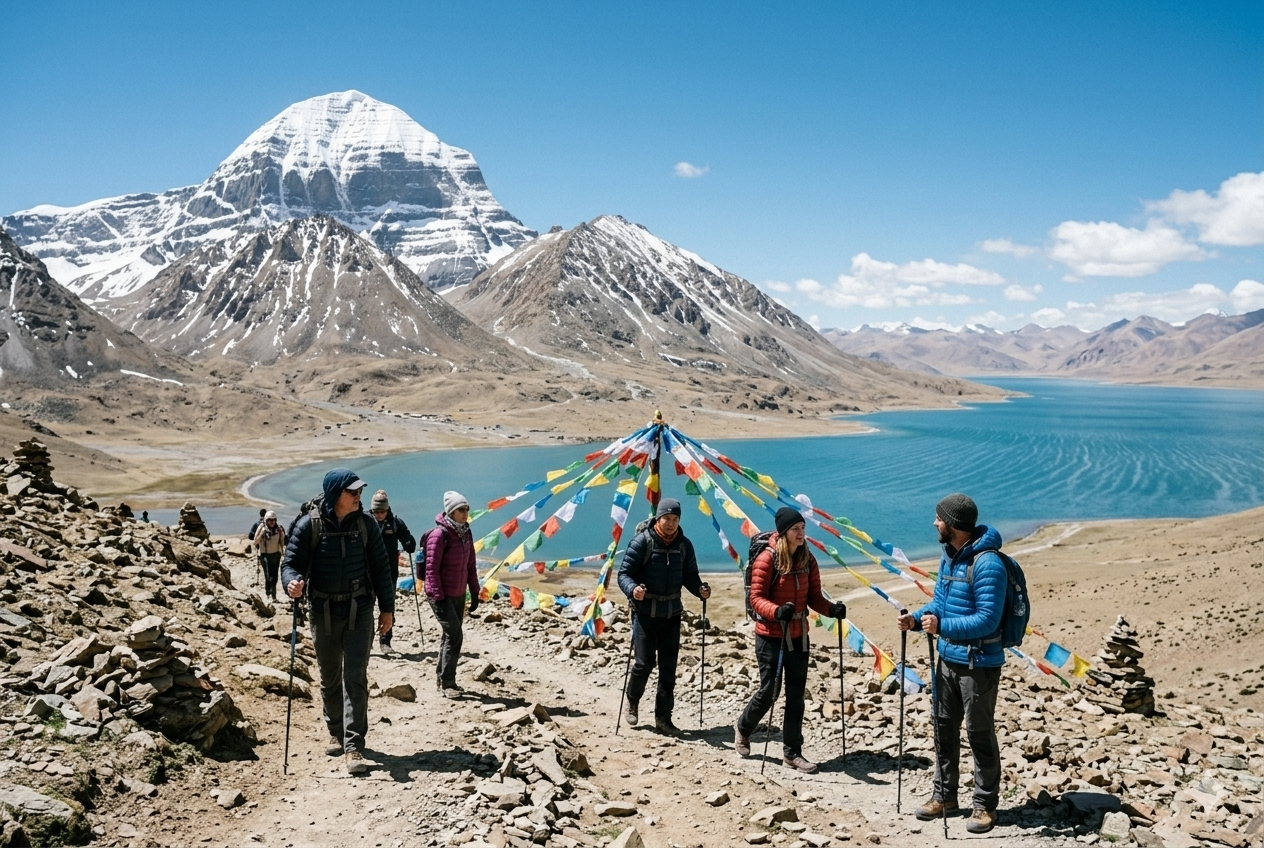
Tarboche hosts the raising of the Tibetan prayer flagpole, a sacred ritual performed every year. With the blowing of conch shells and chanting of sutras, the pole is raised to usher in blessings and commemorate the enlightenment of Lord Buddha.
Pilgrim Experience: Tie your prayer flags and be part of this uplifting, rejuvenating ritual symbolizing spiritual elevation.
8. Drirapuk Gompa – Facing the North Face of Kailash
Altitude: 4,890 m
Named after “female yak horn cave,” this ancient monastery offers the most magnificent view of the North Face of Mount Kailash. It is said that the Tibetan yogi Götsangpa meditated here, guided by a divine Dakini.
Spiritual Vibration: This is where pilgrims often pause for reflection, capturing the awe-inspiring, luminous energy of Kailash.
9. Zutulphuk Gompa – The Cave of Milarepa
Located on the third day of the Kora, Zutulphuk is the sacred cave and meditation site of the great yogi Milarepa. Here, devotees can see his footprints, walking stick, and inner kora stones.
Spiritual Practice: Pilgrims chant mantras, offer prayers, and contemplate on grace, sacrifice, and ascension.
Conclusion: Walk the Path of the Divine in 2026
As you prepare for the Kailash tour in 2026, know that these power points are not just locations—they are portals of transformation, soulful sanctuaries, and spiritual catalysts. Whether you’re seeking inner peace, karmic cleansing, or simply a sacred reconnection, every step around Mount Kailash brings you closer to divine awakening.
Let your 2026 Yatra be a devotional offering, a sacrifice of ego, and a soul-stirring journey of grace and transcendence.
Recent Posts
Mount Kailash Kora Distance and Difficulty
Where Is Mount Kailash Located?
Common Visa Mistakes for Mount Kailash Trip
Kailash Yatra Permit Processing Time from Kathmandu
Required Permits for Mount Kailash Trip by Route
Do You Need a Visa for Mount Kailash Trip
Visa for Mount Kailash Trip
Age Limit for Mount Kailash Yatra
Mindful Trip to Mount Kailash