
What to Expect During the Mount Kailash Parikrama
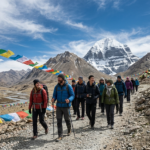
The Mount Kailash Parikrama, also called the Kora, is the spiritual heart of the Mount Kailash Yatra. It is a sacred 3-day, 52-kilometer trek that circles the entire base of Mount Kailash on foot. For Hindus, Buddhists, Jains, and Bon practitioners, completing this circuit is one of the most powerful acts of devotion a person can undertake in their lifetime.
It is also, without exaggeration, one of the hardest 3 days most pilgrims will ever walk. The trail crosses Dolma La Pass at 5,645 meters, higher than Everest Base Camp, in air that holds roughly half the oxygen of sea level. Most people who plan a Mount Kailash Yatra for 2027 have heard the spiritual story. Far fewer have a clear picture of what the actual three days look like, hour by hour, on the ground.
This guide fills that gap. It covers the full day-by-day route with altitude and distance figures, what the guesthouses and food are genuinely like, how much yak and pony support costs, what to pack, and what happens if altitude sickness forces a change of plans. By the end, you should know exactly what you are signing up for, and exactly why so many pilgrims describe it as the most meaningful three days of their lives.
QUICK FACTS: Total distance approximately 52 km over 3 days. Highest point Dolma La Pass at 5,645 meters. Route: Darchen to Dirapuk to Zuthulphuk back to Darchen. Difficulty: moderate to strenuous, primarily due to altitude rather than technical terrain.
Mount Kailash Parikrama Overview: Distance, Duration, and Difficulty
Before the day-by-day breakdown, here is the shape of the whole circuit.
| Detail | Information |
| Total distance | Approximately 52 km (32 miles) |
| Total duration | 3 days, 2 nights on the trail |
| Highest point | Dolma La Pass, 5,645 meters (18,520 ft) |
| Starting and ending point | Darchen, 4,575 meters (15,010 ft) |
| Difficulty level | Moderate to strenuous, mainly due to altitude |
| Trek route | Darchen, Yama Dwar, Dirapuk, Dolma La, Gauri Kund, Zuthulphuk, back to Darchen |
| Mode of travel | On foot, with optional yak, pony, or porter support |
The route follows what is known as the Outer Kora, the standard circuit walked by the vast majority of pilgrims. A separate, far more demanding Inner Kora exists for advanced practitioners, which passes even closer to the mountain itself, but this is rarely attempted and is not part of standard Mount Kailash Yatra packages.
For most pilgrims travelling with an organized group such as our Mount Kailash Manasarovar Yatra 2027 departures, the Kora is the centerpiece of a longer overland journey that begins in Kathmandu, crosses into Tibet, and visits Lake Manasarovar before reaching Darchen.
Useful reading: Mount Kailash Trip for Seniors
Day 1: Darchen to Dirapuk, the Spiritual Beginning
| Distance | Duration | Start Altitude | End Altitude |
| 12 km | 5 to 6 hours | 4,575 m (15,010 ft) | 4,900 m (16,076 ft) |
Day 1 begins with a short drive from Darchen to Yama Dwar, which translates roughly as the Gate of the God of Death. This chorten-marked archway, hung with thousands of prayer flags, is the official starting point of the Kora. Most pilgrims pause here for a moment of prayer before stepping through.
From Yama Dwar, the trail follows the Lha Chu river valley northward. The walking itself is gentle on Day 1, with a wide, well-trodden path and only mild inclines. This is by design: the gradual ascent gives your body its first real exposure to the altitude you will face over the next two days.
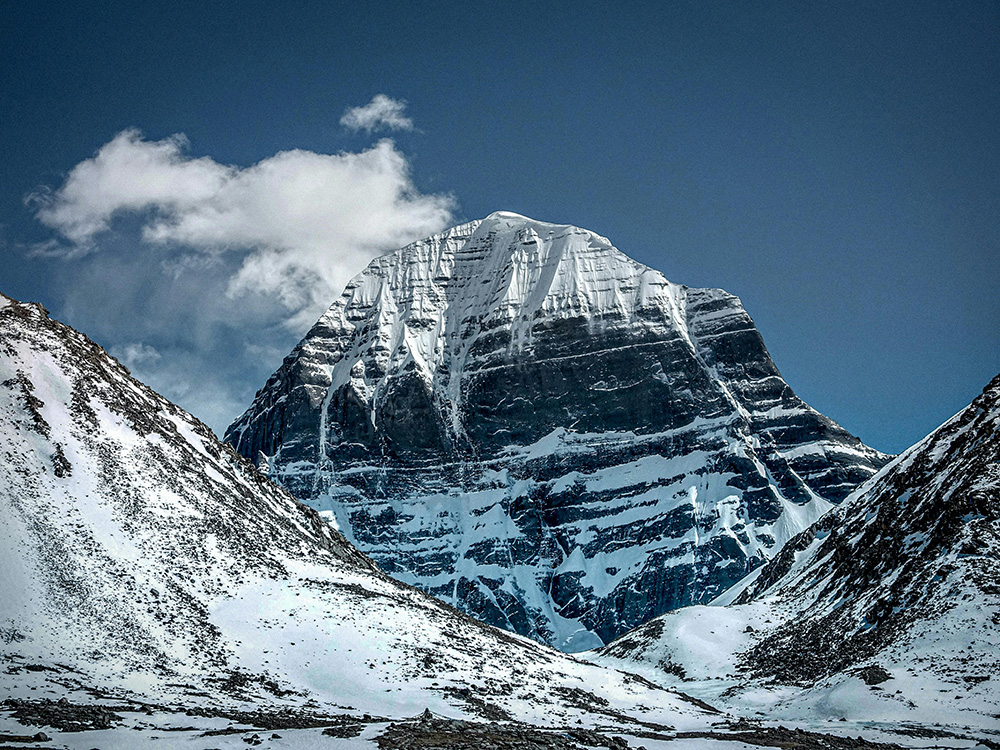
The visual reward comes early. Within the first few hours, the trail opens up to reveal the north face of Mount Kailash, an almost vertical wall of dark rock striped with snow that many pilgrims describe as the moment the trip becomes real. Cameras come out. Conversations stop. People simply stand and look.
The day ends at Dirapuk, a small settlement of guesthouses and a monastery sitting almost directly opposite that north face view. You arrive with hours of daylight left, which most pilgrims spend resting, taking photos of the mountain in changing afternoon light, or sitting quietly with their own thoughts before the harder day ahead.
What to Expect on Day 1
- A gentle trail with mild, gradual inclines, well within reach of most reasonably fit walkers
- Your first full, unobstructed view of the north face of Mount Kailash
- The option to hire a pony or porter for this and the following days, best arranged in advance through your guide
- Overnight in a simple guesthouse or tented camp at Dirapuk, with basic but functional facilities
PRACTICAL TIP: Walk slower than feels necessary on Day 1. The terrain does not demand it, but your lungs do. Drink water constantly, even before you feel thirsty, and avoid the temptation to power ahead simply because the trail feels easy.
Useful: Mount Kailash Private Trip
Day 2: Dirapuk to Zuthulphuk via Dolma La Pass, the Hardest Day
| Distance | Duration | Highest Point | End Altitude |
| 22 km | 9 to 12 hours | Dolma La Pass, 5,645 m (18,520 ft) | 4,790 m (15,715 ft) |
This is the day every pilgrim trains for, and the day every pilgrim remembers most vividly. Day 2 is roughly double the distance of Day 1, includes the steepest sustained climb of the entire Kora, and crosses the highest point most pilgrims will ever stand on in their lives.
Most groups begin walking well before sunrise, often in temperatures well below freezing, by headlamp. The early start is not for atmosphere, although the pre-dawn walk under a sky full of stars at 4,900 meters is unforgettable in its own right. It is practical: the climb to Dolma La takes hours, and starting early means you cross the pass and begin descending before the afternoon winds pick up.
The climb itself is steep and relentless, switching back across loose scree and rock at an altitude where every step requires a conscious breath. Partway up, the trail passes Shiva-tsal, a site scattered with old clothing, hair, teeth, and small personal items left behind by pilgrims over generations. The tradition holds that leaving something of yourself here represents a symbolic death, a shedding of the old self before the rebirth that crossing the pass represents.
Reaching the top of Dolma La Pass is, for many pilgrims, the emotional peak of the entire Mount Kailash Yatra. The pass is marked by an enormous tangle of prayer flags in every color, snapping in the wind, with a large boulder at the center believed to embody the goddess Tara. People weep here. People pray here. People simply sit in silence, aware that they are standing at 5,645 meters having walked there under their own power.
The descent from Dolma La is steep and can be slippery, especially if there is fresh snow, which is possible even in the May to September season. Roughly 45 minutes below the pass, the trail reaches Gauri Kund, the Lake of Compassion, a small turquoise lake set into a rocky bowl below towering cliffs.
Traditionally, devout pilgrims would break the ice and bathe here, though most modern pilgrims simply pause for prayer and photographs given the extreme cold.
From Gauri Kund, a long, gradually easing descent leads to Zuthulphuk, where the day finally ends. By the time most pilgrims arrive, they have been walking for 9 to 12 hours, often more. It is, by any measure, a genuinely hard day.
What to Expect on Day 2
- A pre-dawn start, often in temperatures of minus 10 degrees Celsius or colder at the trailhead
- A steep, sustained climb to Dolma La Pass at 5,645 meters, the highest point of the entire journey
- Strong winds and extreme cold at the pass itself, even when the sky is clear
- Thin air that makes even slow walking feel like exertion, and a real risk of altitude sickness symptoms such as headache and nausea
- Some of the most visually and spiritually powerful moments of the entire trip, at Shiva-tsal, the pass itself, and Gauri Kund
- A long descent and a genuinely tired arrival at Zuthulphuk, in a basic guesthouse or lodge
PRACTICAL TIP: Carry high-energy snacks you actually like eating, because appetite tends to disappear at altitude and you need the calories regardless. Trekking poles make a noticeable difference on both the climb and the descent. If your guide offers oxygen, do not be embarrassed to use it. It is there for exactly this kind of day.
Day 3: Zuthulphuk to Darchen, Completion and Return
| Distance | Duration | End Altitude |
| Approximately 14 km | 3 to 4 hours | 4,575 m, Darchen |
After Day 2, Day 3 feels almost gentle by comparison, and most pilgrims are grateful for that. The trail follows a river valley out of Zuthulphuk on a gradual, mostly flat or downhill grade, passing several small meditation caves and shrines used by hermits and practitioners over centuries.
This final stretch tends to be quieter and more reflective than the previous two days. Conversations slow down. Many pilgrims walk in silence for stretches, processing what they experienced at Dolma La the day before. The physical demands have eased, but something else has shifted too.
The Kora technically ends back at Darchen, closing the circle that began at Yama Dwar three days earlier. For most pilgrims, walking back into Darchen and seeing the same buildings and the same base camp they left feels strange. Nothing about the town has changed. Everything about how you experience it has.
What to Expect on Day 3
- A gradual, relatively easy descent and walk, a welcome contrast to Day 2
- Meditation caves and small shrines along the river valley trail
- A quieter, more reflective atmosphere among most groups
- A genuine sense of completion and accomplishment on arrival back in Darchen
PRACTICAL TIP: Use this day deliberately. It is tempting to rush back to a hot shower and a real bed, both reasonable desires after Day 2, but many pilgrims later say they wish they had walked Day 3 more slowly and paid more attention. You only do this once.
What the Guesthouses, Food, and Toilets Are Really Like
This is the section most travel guides skip, and it is exactly the section most people want before they commit to three days at this altitude. Here is the honest picture.
Accommodation at Dirapuk and Zuthulphuk
Both overnight stops offer basic guesthouse accommodation, sometimes supplemented by tented camps during peak season when guesthouses are full. Rooms are simple: shared dormitory-style sleeping areas with thin mattresses on raised platforms, usually shared between several pilgrims from your group. There is no heating beyond a central stove in the communal area, which is lit in the evening and burns dried yak dung, the traditional fuel of the Tibetan plateau. A good quality sleeping bag rated for sub-zero temperatures is not optional, it is essential.
Food on the Kora
Meals are simple, hot, and vegetarian, typically consisting of rice, noodles, soup, and basic vegetable dishes prepared by your group’s cook or available at the guesthouse. Thukpa, a Tibetan noodle soup, is a common and welcome staple at altitude. Hot tea, particularly Tibetan butter tea or sweet milk tea, is available throughout the day and is genuinely useful for staying warm and hydrated. Do not expect variety or anything resembling a normal restaurant menu. Expect calories, warmth, and enough food to fuel the next day’s walk.
Toilets on the Kora
This is the question almost nobody asks out loud but almost everyone wants answered. Toilet facilities at Dirapuk and Zuthulphuk are basic squat-style facilities, often outdoor or semi-outdoor, and can be genuinely unpleasant, especially after dark and in freezing temperatures. Bring your own toilet paper or tissues, as these are not reliably provided. A headtorch for nighttime trips is essential. This is, without exaggeration, one of the more challenging aspects of the Kora for many pilgrims, particularly those used to Western standards of plumbing, and it is far better to know this in advance than to be surprised by it.
Connectivity Along the Route
Mobile signal is unreliable to nonexistent for most of the Kora. Some pilgrims occasionally get a brief signal at Dirapuk depending on network conditions on a given day, but this should not be relied upon. There is no electricity for charging devices at either overnight stop in most cases. Bring a fully charged power bank if you want your phone or camera available for the duration, and set expectations with family at home that you will be unreachable for at least three days.
Yak, Pony, and Porter Costs on the Kora
Hiring support animals or porters is common and, for many pilgrims, makes the difference between a manageable trip and an overwhelming one. Here is what to budget.
| Support Type | Typical Use | Approximate Cost |
| Pony or horse (riding) | Carries a person for all or part of the Kora, particularly useful on Day 2 | Approximately USD 150 to 250 for the full 3-day Kora, per pony |
| Yak (luggage) | Carries duffel bags and gear, freeing pilgrims to walk with only a daypack | Approximately USD 100 to 180 for the full 3-day Kora, per yak |
| Porter (human) | Carries a single pilgrim’s bag, sometimes preferred over yaks for smaller loads | Approximately USD 80 to 150 for the full 3-day Kora, per porter |
Prices vary by season, group size, and current local rates, and should always be confirmed with your guide before departure rather than treated as fixed. Booking yak, pony, or porter support in advance through your tour operator, rather than trying to arrange it on the spot in Darchen, is strongly recommended, particularly during the busy May to September season when availability can be limited.
If your group is travelling with us on a Mount Kailash Private Trip, yak, pony, and porter arrangements can be built into your itinerary and budget in advance, removing one more uncertainty from an already demanding three days.
What to Pack for the Kailash Parikrama
Packing for the Kora means packing for three days of extreme temperature swings, from a warm midday sun to a freezing pre-dawn pass crossing, with no opportunity to buy anything you forgot.
- Sturdy, broken-in trekking boots, ideally waterproof, and never brand new on departure day
- Layered clothing: a moisture-wicking base layer, an insulating mid layer such as fleece or down, and a windproof and waterproof outer shell
- Thermal wear for sleeping, plus a warm hat, gloves, and a buff or scarf for wind protection at the pass
- A reusable water bottle and oral rehydration or hydration salts
- High-calorie energy bars, nuts, chocolate, or other snacks you actually enjoy eating, since appetite drops at altitude
- Sunglasses with strong UV protection, high-SPF sunscreen, and lip balm, since UV exposure at this altitude is intense even on cloudy days
- A small daypack for the items you need during the walking day, separate from your main duffel
- Personal medications, plus Diamox (acetazolamide) if recommended by your doctor for altitude sickness prevention
- A headtorch with spare batteries, essential for the pre-dawn Day 2 start and for nighttime toilet trips
- A fully charged power bank, since charging facilities are not available at Dirapuk or Zuthulphuk
- Toilet paper or tissues, since these are not reliably provided at guesthouse facilities
PRO TIP: Many pilgrims choose to hire porters, yaks, or ponies specifically to carry the bulk of this gear, walking the Kora itself with only a light daypack containing water, snacks, sunscreen, and a camera. This single decision makes a measurable difference to how the three days feel.
Spiritual Significance of the Kailash Kora
The physical experience of the Kora is only half the story. The reason pilgrims from four major faith traditions travel here is rooted in beliefs that predate any guesthouse or permit system.
In Hindu tradition, Mount Kailash is the eternal abode of Lord Shiva, and completing a single Kora is believed to cleanse a lifetime of accumulated sins. In Tibetan Buddhism, the mountain is known as Kang Rinpoche, and circling it is believed to bring the practitioner closer to enlightenment with each circuit. Completing 108 Koras, an extraordinarily rare feat attempted by only the most devoted practitioners over months or years, is said to lead to liberation within that lifetime.
Jain tradition holds that Rishabhanatha, the first Tirthankara, attained liberation near Mount Kailash, and Bon practitioners, followers of Tibet’s pre-Buddhist spiritual tradition, regard the mountain as the seat of the sky goddess Sipaimen and have circled it for far longer than either Buddhism or Hinduism has existed in the region.
Walking the Kora is described across these traditions as symbolically circling the axis of the universe itself. Whatever your own belief system, walking three days through landscapes this remote, this physically demanding, and this visually overwhelming tends to produce its own kind of clarity, regardless of theology.
Best Time to Do the Mount Kailash Parikrama in 2027
The Kora is only accessible between approximately May and mid-September, when the high passes are clear of heavy snow and the Tibetan plateau roads are passable. Outside this window, both the trekking conditions and the permit system make the Kora effectively impossible for most pilgrims.
Within that season, certain dates carry additional spiritual weight. The Saga Dawa Festival, which commemorates the birth, enlightenment, and parinirvana of Lord Buddha, typically falls in May or June and draws large numbers of pilgrims and Tibetan devotees to Kailash for this period specifically. Full moon dates throughout the season are also considered especially auspicious for completing the Kora.
If your 2027 plans are flexible, aligning your Kora with a full moon date or the Saga Dawa period adds a layer of shared devotion and cultural richness to the experience, though it also means busier guesthouses and earlier booking requirements. Our Mount Kailash Saga Dawa Festival Tour and Mount Kailash Full Moon Tour are both built specifically around these windows for 2027 departures.
What If You Cannot Complete the Kora
This is a real concern for many pilgrims, and an honest answer matters more than reassurance alone. Altitude affects everyone differently, regardless of fitness level, age, or previous trekking experience, and it is genuinely impossible to predict in advance who will struggle.
If altitude sickness symptoms become severe on Day 2, the most common point of difficulty, the standard response is descent. On most sections of the route, this means returning toward Darchen rather than continuing forward, since Darchen has the most reliable access to rest, warmth, and onward transport. Experienced guides carry oxygen and basic first aid for exactly this situation, and groups are generally structured so that one guide or assistant can accompany an affected pilgrim back down while the rest of the group continues, where group size allows.
It is worth being honest with yourself and your guide from Day 1 about how you are feeling. Headaches, nausea, and breathlessness are common and often manageable with rest, hydration, and a slower pace, but worsening symptoms, confusion, or loss of coordination are signs that descent should not be delayed. There is no failure in turning back. Every experienced guide on this route has seen it before, and pilgrim safety always takes priority over completing the circuit.
Before you travel, make sure your permit and travel insurance arrangements account for this possibility. Our guide to Kailash Yatra permit processing time from Kathmandu explains how the permit system works and what flexibility exists if your plans change.
Frequently Asked Questions About the Mount Kailash Parikrama
Q1. How difficult is the Mount Kailash Parikrama really?
The Mount Kailash Parikrama is moderately to strenuously difficult, with the difficulty coming almost entirely from altitude rather than technical climbing. The trail itself does not require ropes, ladders, or climbing skills. However, walking 12 to 22 km per day at altitudes between 4,575 and 5,645 meters, where the air contains roughly half the oxygen available at sea level, is genuinely demanding for almost everyone, including experienced trekkers. Reasonable fitness, proper acclimatization in the days before the Kora, and a realistic, unhurried pace are more important than prior high-altitude experience.
Q2. Can I do the Kailash Kora without a guide?
In practice, no. Foreign nationals require a Tibet Travel Permit and Chinese Group Visa to enter the region at all, both of which are processed through licensed tour operators rather than issued to individual independent travelers. Beyond the permit requirement, the remoteness of the route, the lack of signage in many sections, the risk of altitude sickness, and the very limited facilities make an experienced guide a practical necessity rather than an optional extra. Every Mount Kailash Yatra package from Kathmandu, including private departures, includes guide support for this reason.
Q3. How cold does it get on the Kailash Kora?
Temperatures vary enormously between day and night. Daytime temperatures during the May to September season are often comfortable, sometimes reaching the high teens Celsius in direct sun. However, nighttime and pre-dawn temperatures, particularly on the Day 2 start toward Dolma La Pass, regularly drop to minus 10 degrees Celsius or lower, and wind chill at the pass itself can make it feel significantly colder. Layered clothing and a sleeping bag rated for sub-zero conditions are essential regardless of which month you travel.
Q4. Is there a shorter or easier alternative to the full 3-day Kora?
The 3-day, 52 km circuit described in this guide is the standard route used by the vast majority of pilgrims and is what is included in our Mount Kailash Manasarovar Yatra 2027 packages. Some pilgrims with significant time constraints or mobility limitations choose not to attempt the Kora at all and instead spend their time at Darchen and Lake Manasarovar, which still carries deep spiritual significance in most traditions. There is no officially sanctioned shorter version of the full Kora itself, though pilgrims can choose to ride a pony for the more difficult sections rather than walk the entire distance on foot.
Q5. What is the best way to prepare physically for the Kora?
The most useful preparation is regular cardiovascular exercise in the months before departure, such as hiking, brisk walking, stair climbing, or cycling, ideally building up to multi-hour sessions on consecutive days to simulate the demands of Day 2. If possible, spending time at altitude before your trip, even a weekend hike above 2,500 to 3,000 meters, helps your body and mind understand what altitude exposure feels like. However, no amount of sea-level training fully replicates 5,645 meters, which is why the itinerary’s built-in acclimatization days at Saga and Manasarovar before reaching Darchen matter as much as any gym preparation.
Q6. Are oxygen cylinders available during the Kora?
Yes, most organized Mount Kailash Yatra groups carry portable oxygen cylinders as part of their first aid provisions, managed by the guide or support crew for emergency use. This is not intended as a routine aid for completing the trek, but as a safety measure for genuine altitude sickness symptoms. If you are travelling with Mount Kailash Trip, oxygen availability is included as standard across our group and private departures, including the Mount Kailash Private Trip.
Q7. How many people typically complete the Kora in a group?
The overwhelming majority of pilgrims who reach Darchen and begin the Kora complete it successfully, particularly when travelling with an experienced operator that builds in proper acclimatization days before the trek begins. Genuine inability to continue due to altitude sickness does happen, but it is the exception rather than the norm. Preparation, pacing, and a willingness to go slowly are far better predictors of success than age or general fitness level alone.
Q8. Can elderly pilgrims complete the Mount Kailash Parikrama?
Many elderly pilgrims complete the Kora successfully every season, often using pony support for some or all of Day 2 in particular. Age alone is not a reliable predictor of how someone will respond to altitude. That said, additional preparation, a realistic conversation with your doctor before travel, and choosing a tour operator experienced in supporting older travelers all matter significantly. Our Mount Kailash Trip for Seniors package is built specifically around these considerations, with additional rest days and flexible pony arrangements.
Q9. What permits are needed to do the Kailash Kora?
The Kora itself does not require a separate permit beyond the documents needed to enter the Kailash region of Tibet in the first place, which include a Tibet Travel Permit, a Chinese Group Visa, and an Alien’s Travel Permit, all arranged through your licensed tour operator as part of your overall Mount Kailash Yatra package. For a full explanation of how this process works and how long it takes, see our detailed guide to Kailash Yatra permit processing time from Kathmandu.
Q10. When should I book my 2027 Kailash Kora trip?
Given the permit processing timelines, the limited guesthouse capacity at Dirapuk and Zuthulphuk, and the popularity of full moon and Saga Dawa period departures, most experienced pilgrims book their Mount Kailash Yatra 2027 trip at least 3 to 4 months ahead of their intended travel dates, and earlier for May or June departures. Booking early also gives more flexibility to arrange yak, pony, or porter support in advance rather than competing for availability in Darchen itself.
Ready to Walk the Kora Yourself
Reading about the Mount Kailash Parikrama and walking it are two very different experiences, but the gap between them is smaller than most people expect. The route is demanding, the facilities are basic, and the cold at Dolma La Pass is real. It is also, by the account of nearly everyone who has done it, worth every difficult step.
If this guide has answered your questions and the 2027 season feels like the right time, the next step is simple. Explore our Mount Kailash Manasarovar Yatra 2027 departures for fixed group dates, or look at our Mount Kailash Overland Tour for the complete Kathmandu to Kailash to Kathmandu journey that includes this Kora as its centerpiece. If your group has specific needs around pacing, dates, or support, our Mount Kailash Private Trip can be built entirely around them.
Whatever path gets you to Darchen, the Kora itself does not change. It is the same 52 km it has always been, walked by pilgrims for centuries before you and pilgrims who will come long after. For three days in 2027, it can be yours.
Recent Posts
Mount Kailash Kora Distance and Difficulty
Where Is Mount Kailash Located?
Common Visa Mistakes for Mount Kailash Trip
Kailash Yatra Permit Processing Time from Kathmandu
Required Permits for Mount Kailash Trip by Route
Do You Need a Visa for Mount Kailash Trip
Visa for Mount Kailash Trip
Age Limit for Mount Kailash Yatra
Mindful Trip to Mount Kailash