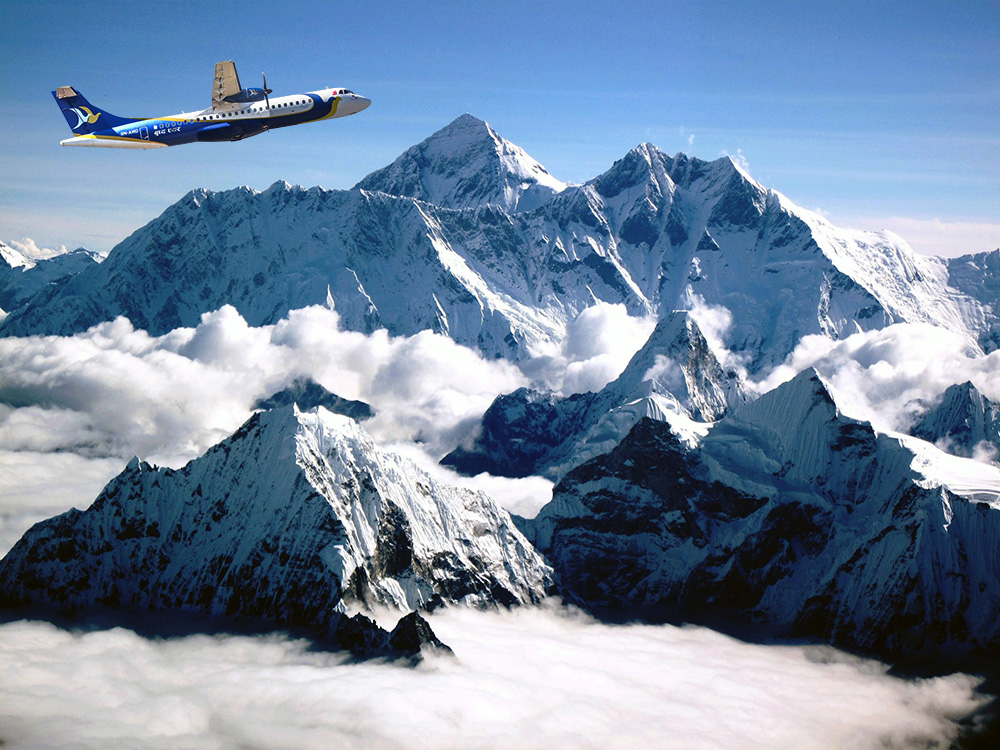

Mount Kailash Motorcycle Tour
Mount Kailash Motorcycle Tour – Ride to the Roof of the World on a Sacred Adventure.
The Mount Kailash Motorcycle Tour runs 14 days and roughly 1,200 km of riding across Nepal and the Tibetan Plateau — from Kathmandu to Lake Manasarovar (4,556 m) and on to Darchen, the base for the Kailash Parikrama. The route enters Tibet via the Kerung border crossing (Rasuwagadhi), the main overland entry since the Kodari highway was closed after the 2015 earthquake.
You ride a Royal Enfield Classic 500cc or Royal Enfield Himalayan 411cc — both well-suited to the conditions. A support vehicle runs the whole route alongside you carrying luggage, a spare parts kit, oxygen cylinders, and an on-tour mechanic. You’re not riding alone into Tibet. Everything behind the handlebars is managed: permits, guides, accommodation, meals, and all border formalities.
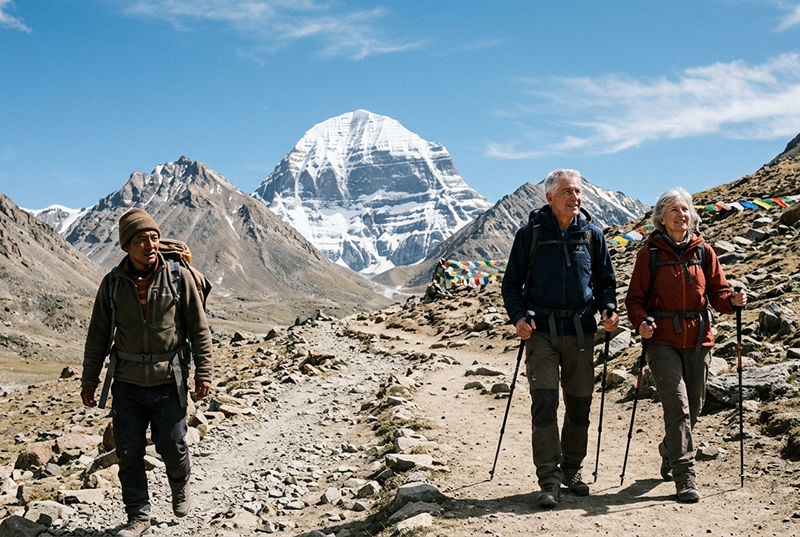
One important detail: the Kailash Kora itself (52 km around the mountain) is done on foot over three days. The bikes stay in Darchen. Dolma La Pass at 5,620 m is the high point of the trek — steep, cold, and demanding. The riding gets you to Kailash. The Kora completes the pilgrimage.
Ride days average 150–200 km on a mix of paved Friendship Highway sections and rougher plateau tracks. The longest single day — Saga to Lake Manasarovar — covers 545 km over 9 hours. Altitude is a constant factor: most of the Tibet section sits above 4,000 m, and two mountain passes exceed 5,000 m. The acclimatization day in Saga is not optional — it is the reason this itinerary works.
‘Prefer to travel by vehicle? Our Mount Kailash Overland Tour covers the same route in a private 4WD with full support.
Tour Route & Riding Highlights
- Kerung Valley descent — steep switchbacks from the Nepal border at 1,762 m up to the plateau; one of the most dramatic entry sequences in the Himalayas
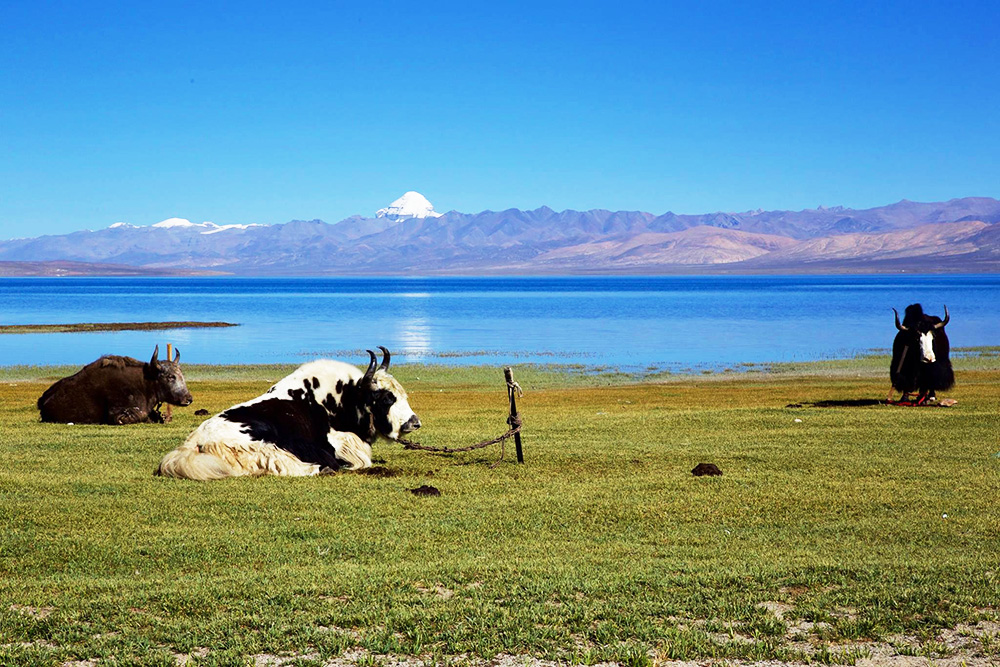
- Saga to Manasarovar via Mayum La Pass (5,220 m) — 545 km of open plateau with yak herds, nomad settlements, and the first views of the Himalayan range from the Tibetan side
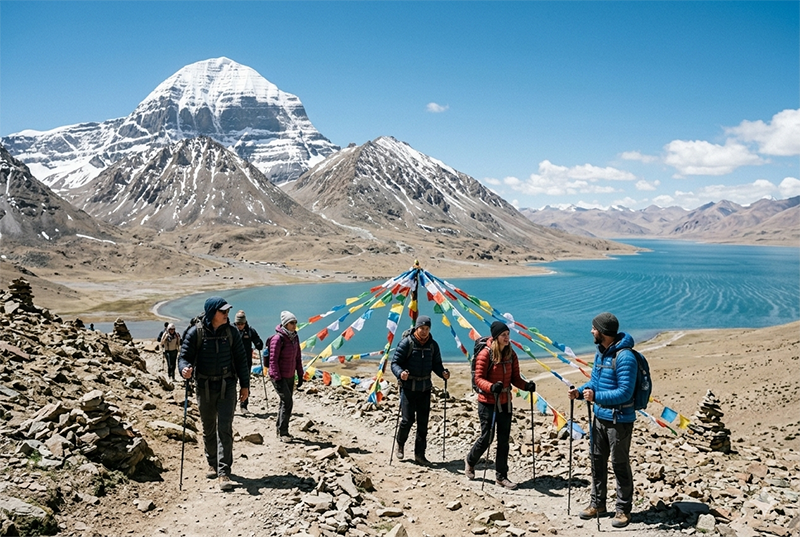
- Lake Manasarovar at 4,556 m — sacred to four religions; circumnavigation by eco-vehicle available; holy bathing rituals at Chiu Gompa on the western shore
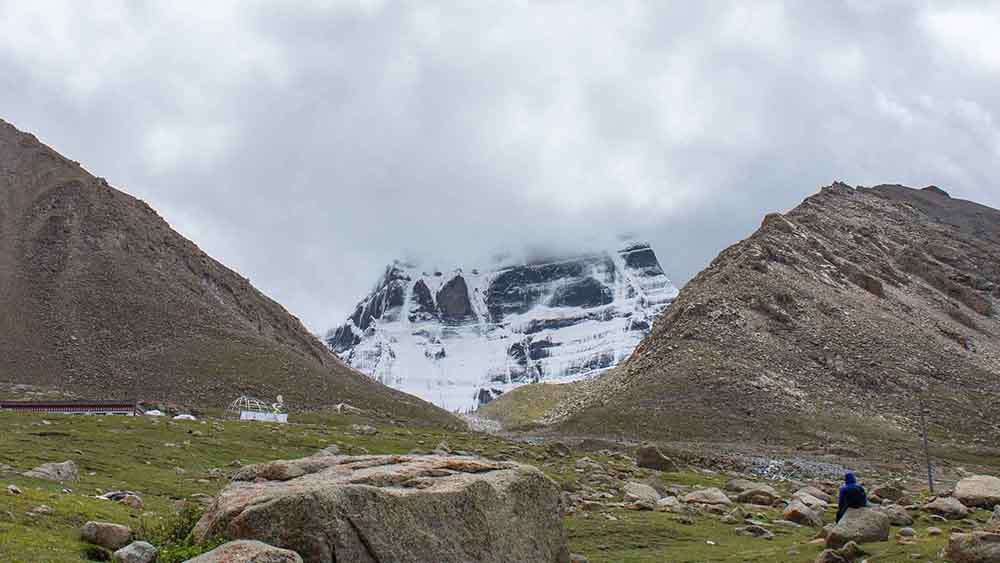
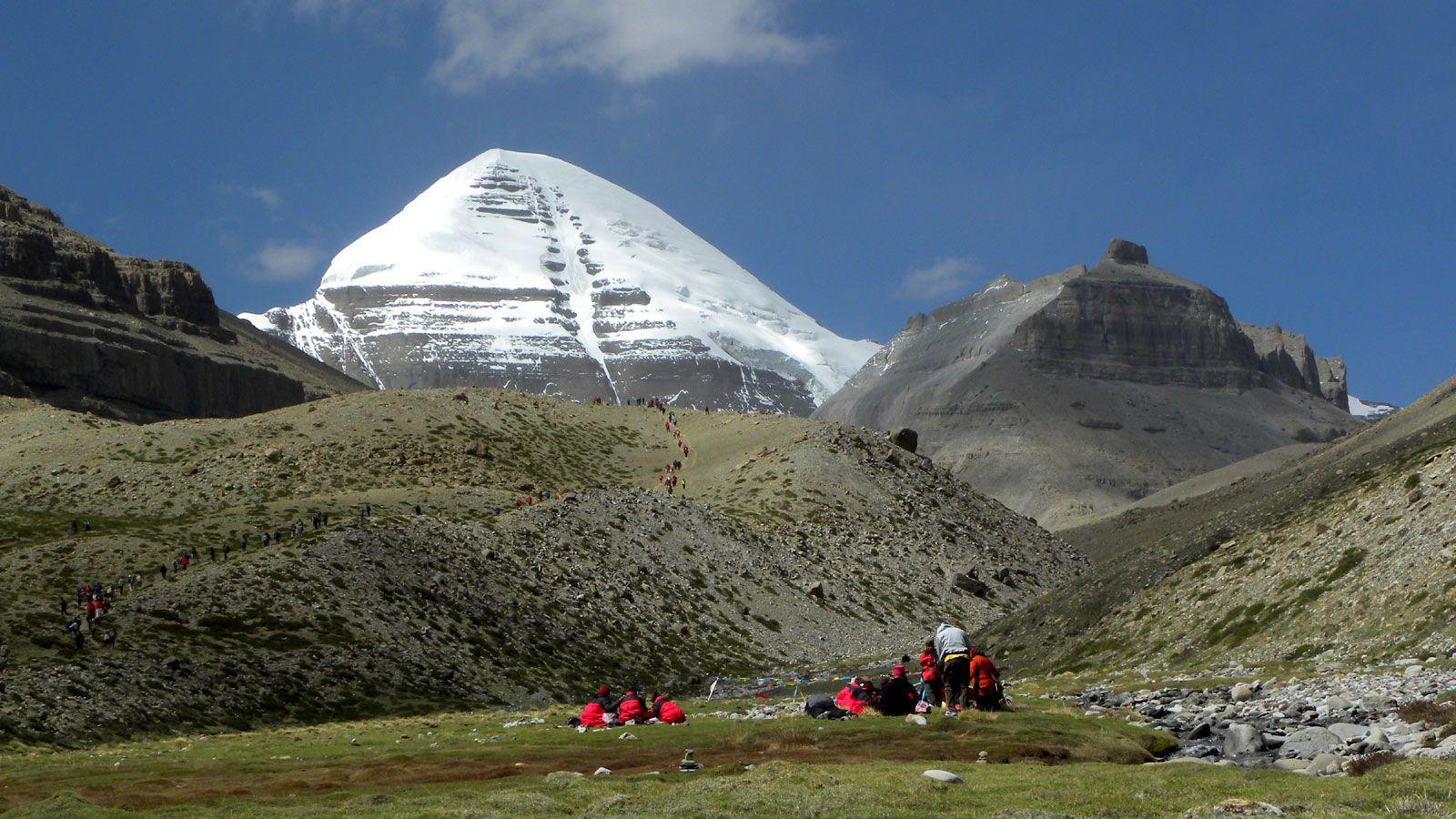
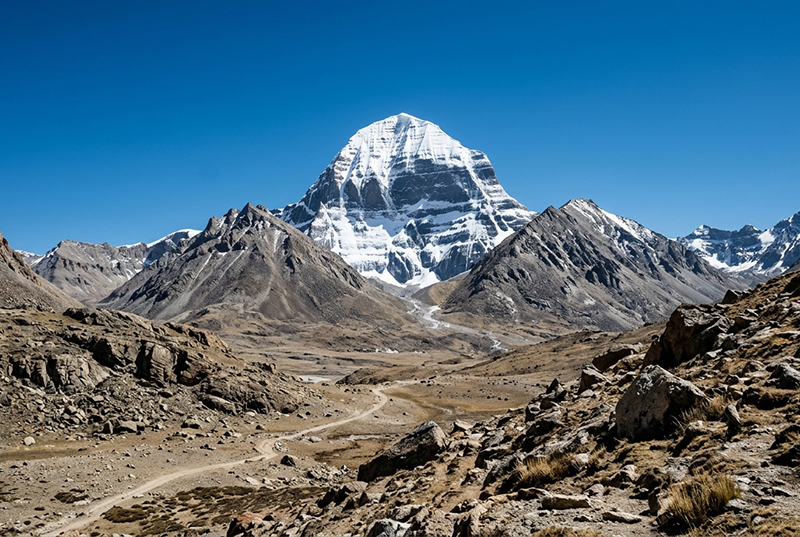
- Darchen (4,690 m) — bikes stay here; first direct view of Mount Kailash’s south face
- Kailash Parikrama (on foot): 52 km over 3 days; maximum altitude 5,620 m at Dolma La Pass; passes Dirapuk Monastery (north face views), Gaurikund Lake, and Zutulphuk
- Return via Kerung through the same high-altitude plateau, with more time to stop at locations you passed on the outbound leg
Want to add Everest Base Camp to your Tibet journey? See our 16-day Kailash Tour with Everest Base Camp.
The Bikes: What You Ride
We provide Royal Enfield Classic 500cc and Royal Enfield Himalayan 411cc bikes for this tour. Both are well-established on the Kathmandu-to-Kailash route — reliable, parts-available in the region, and suited to sustained riding at altitude where engine performance drops.
| Model | Engine | Best For | Notes |
| Royal Enfield Classic 500cc | 499cc single-cylinder | Riders who prefer a cruiser position; long-distance comfort on mixed terrain | Classic, heavy, stable at speed on paved sections |
| Royal Enfield Himalayan 411cc | 411cc single-cylinder | Riders who want more agility on rough tracks and passes | Adventure tourer, lighter, better ground clearance |
| Own motorcycle | Your choice | Experienced riders with appropriate machines | Additional paperwork required — see Permits section; fuel extra in all cases |
Fuel is not included in the package price. Gas stations exist in Kerung, Saga, and other towns on the route. The support vehicle also carries emergency fuel cans for remote sections.
Riding solo or with your own group? Our Mount Kailash Private Trip can be fully customized around your preferred motorcycle and departure date.
Best Time for the Mount Kailash Motorcycle Tour
| Month | Road Conditions | Riding Weather | Recommendation |
| Jan–Feb | High passes snowbound or closed | Extreme cold (-15 to -25°C at altitude) | Not operational |
| March–April | Roads reopening; unpredictable; some ice on passes | Cold mornings; warming afternoons | Possible for experienced riders — check current conditions |
| May | Generally open; pre-monsoon stable | Cool and dry; 5–15°C at altitude | ✓ Good — uncrowded |
| June | Best road conditions; Saga Dawa festival | Warm days at altitude (10–18°C) | ✓ Excellent — peak riding season |
| July–Aug | Tibet drier than Nepal but some plateau flooding | Warm; afternoon thunderstorms possible | ✓ Good — watch road reports from Saga to Manasarovar |
| September–Oct | Excellent; dry and clear post-monsoon | Crisp; 5–15°C; exceptional visibility | ✓ Excellent — best photography; clear Kailash views |
| November | Passes beginning to ice; late season | Cold and cooling fast | Marginal — for experienced cold-weather riders only |
| December | Road closures begin | Harsh | Not operational |
To ride in during the most sacred Buddhist observance of the year, see our dedicated Saga Dawa Festival Tour for fixed June departures.
Riding Difficulty & Fitness Requirements
This is a demanding high-altitude motorcycle expedition, not a leisure ride. The physical challenges come from two sources: the riding itself and the altitude.
- Riding: expect 4–9 hours in the saddle on days that are operational. Road surfaces range from sealed highway to rough gravel tracks with river crossings and steep switchbacks. You should be comfortable riding 150–200 km per day over mixed terrain.
- Altitude: Saga sits at 4,500 m; Manasarovar at 4,556 m; Darchen at 4,690 m. Riding at altitude is physically harder than at sea level — your body works harder at lower oxygen levels even when seated on a bike. Fatigue hits faster.
- Kailash Kora: the 3-day trek (Days 9–11) requires walking 52 km including a 22 km day crossing Dolma La Pass at 5,620 m. Bikes do not go on the Kora. Physical fitness for the trek is as important as riding ability.
- License: a valid motorcycle license from your home country is required. An International Driving Permit is strongly recommended. Chinese/Tibetan authorities may check at border crossings and checkpoints.
- Experience: you should have at least 2–3 years of active motorcycle riding experience, including some off-road or long-distance touring. First-time riders are not suitable for this itinerary.
- Own bike: possible, but requires a Carnet de Passage, temporary import permit for China/Tibet, and additional documentation at the border. Allow extra processing time. We recommend consulting us before booking if you plan to bring your own machine.
Permits Required
Tibet is a restricted zone. The following permits are required for every participant — all processed by us in Kathmandu before departure:
- Tibet Travel Permit (TTP) — mandatory for all foreign nationals entering the Tibet Autonomous Region
- Alien’s Travel Permit (PSB) — for travel outside Lhasa, including the Friendship Highway corridor and western Tibet
- Military/Border Permit — required for border zones including Kerung and the Ngari/Kailash region
- Kailash/Ngari Special Area Permit — enforced at multiple checkpoints en route to Darchen
Processing takes 4–7 working days. You must be present in Kathmandu before processing begins. Indian nationals may need additional documentation — contact us for current 2027 requirements.
Own-bike riders require additional vehicle import documents. We advise arranging these at least 3–4 weeks before departure.
Sample Itinerary
Day 01: Arrival in Kathmandu – Start of Kailash Yatra
Max Altitude: 1,355 m / 4,445 ft
Meals: Dinner
Accommodation: Hotel
Transport: Bus / Van
Upon arrival at Tribhuvan International Airport, Kathmandu, our team will warmly welcome you and transfer you to your hotel. After hotel check-in and rest, we begin our Mount Kailash Trip with an evening visit to the sacred Pashupatinath Temple. Witness the spiritual evening Aarti, where oil lamps, chanting, and rituals create a deeply divine atmosphere—an ideal spiritual beginning to your Kailash Yatra.
Day 02: Kathmandu Sightseeing – Spiritual Preparation for Mount Kailash Tour
Max Altitude: 1,355 m / 4,445 ft
Meals: Breakfast, Lunch, Dinner
Accommodation: Hotel
Transport: Bus / Van
After breakfast, enjoy a guided sightseeing tour of the Kathmandu Valley. Visit Pashupatinath Temple, Guheshwori Mata Temple, and Boudhanath Stupa. After lunch, optional visits include Budhanilkantha (Jal Narayan) and Swayambhunath (Monkey Temple)—important spiritual landmarks before your Mount Kailash Tour.
Day 03: Drive from Kathmandu to Timure – Kailash Yatra Departure
Max Altitude: 1,762 m / 5,780 ft
Meals: Breakfast, Lunch, Dinner
Accommodation: Hotel
Transport: Motorbike
Drive Duration: 6–7 hours | Distance: 160 km
After breakfast, drive towards Timure, a Nepalese border village near the Friendship Bridge. Due to mountainous terrain and road conditions, local buses are used. The scenic yet rugged journey prepares you physically and mentally for the sacred Mount Kailash Trip. Overnight in Timure.
Day 04: Cross Friendship Bridge – Enter Tibet & Drive to Kerung
Max Altitude: 2,800 m
Meals: Breakfast, Lunch, Dinner
Accommodation: Hotel
Transport: Motorbike
Drive Duration: 1 hour | Distance: 26 km
After breakfast, walk to Kerung Gadhi (Friendship Bridge) and complete immigration formalities on both Nepal and China sides. Continue driving to Kerung Town in Tibet. Overnight in Kerung allowing gradual acclimatization for your Kailash Yatra.
Day 05: Drive from Kerung to Saga
Max Altitude: 4,500 m
Meals: Breakfast, Lunch, Dinner
Accommodation: Hotel
Transport: Motorbike
Drive Duration: 4 hours | Distance: 180 km
Drive through the vast Tibetan Plateau to Saga, located near the sacred Brahmaputra River, which originates close to Mount Kailash. Cross several high mountain passes and enjoy stunning Himalayan landscapes. Overnight in Saga.
Day 06: Acclimatization Day in Saga
Max Altitude: 4,500 m
Meals: Breakfast, Lunch, Dinner
Accommodation: Hotel
A full rest and acclimatization day is essential for a safe and successful Mount Kailash Tour. Gentle walks and relaxation help your body adapt before heading to higher elevations.
Day 07: Drive from Saga to Lake Manasarovar (Chiu Gompa)
Max Altitude: 4,640 m
Meals: Breakfast, Lunch, Dinner
Accommodation: Manasarovar Hot Spring
Transport: Motorbike
Drive Duration: 9 hours | Distance: 545 km
One of the most awaited days of the Kailash Yatra. Drive across the Tibetan plateau, crossing Mayum La Pass (5,220 m). After document checks, continue towards sacred Lake Manasarovar. Circumambulate the lake clockwise and reach Chiu Gompa, located on its western shore.
Day 08: Manasarovar to Darchen
Max Altitude: 4,690 m / 15,010 ft
Meals: Breakfast, Lunch, Dinner
Accommodation: Guesthouse
Transport: Motorbike
Drive Duration: 45 minutes | Distance: 37 km
Perform holy rituals, prayers, and take a sacred bath at Lake Manasarovar. After lunch, drive to Darchen, the base camp for Mount Kailash Parikrama.
Day 09: Darchen to Yam Dwar – Trek to Dirapuk
Max Altitude: 5,080 m
Meals: Breakfast, Lunch, Dinner
Accommodation: Guesthouse
Transport: Bus + Trek
Drive to Yam Dwar (Tarboche), the official gateway to Mount Kailash. Begin trekking to Dirapuk, offering breathtaking close views of the North Face of Mount Kailash. Horses/yaks can be arranged in advance. Those not trekking return to Darchen.
Day 10: Dirapuk – Dolma La Pass – Gauri Kunda – Zutulphuk
Max Altitude: 5,800 m (Dolma La Pass)
Meals: Breakfast, Lunch, Dinner
Accommodation: Guesthouse
Trek Distance: 22 km | Duration: 9 hours
The most challenging and sacred day of the Mount Kailash Trip. Trek across Dolma La Pass, the highest point of the yatra, and descend to the holy Gauri Kunda Lake. Continue to Zutulphuk for overnight stay in basic accommodation.
Day 11: Zutulphuk to Zongdau – Drive Back to Saga
Max Altitude: 4,500 m
Meals: Breakfast, Lunch, Dinner
Accommodation: Hotel
Transport: Trek + Bus
Complete the final leg of the Kailash Parikrama, trekking to Zongdau. Rejoin the group in Darchen and drive back to Saga. Arrival late evening.
Day 12: Drive from Saga to Kerung
Max Altitude: 2,800 m
Meals: Breakfast, Lunch, Dinner
Accommodation: Hotel
Transport: Motorbike
Drive Duration: 3–4 hours | Distance: 180 km
Descend to Kerung, enjoying improved oxygen levels and scenic Himalayan landscapes.
Day 13: Kerung to Kathmandu
Max Altitude: 1,355 m / 4,445 ft
Meals: Breakfast, Lunch, Dinner
Accommodation: Hotel
Transport: Motorbike
Cross back into Nepal via the Friendship Bridge after immigration formalities. Drive through mountainous roads to Kathmandu. Arrival in the evening.
Day 14: Departure – End of Mount Kailash Tour
Meals: Breakfast
Transfer to Tribhuvan International Airport for your onward journey. Please arrive at the airport at least three hours before departure.
Frequently Asked Questions
1. Do I need previous motorcycle touring experience?
Yes. This is not an introductory tour. You should have at least 2–3 years of active motorcycle riding, including some long-distance or off-road experience. You’ll be riding 150–200 km per day on a mix of sealed roads and rough plateau tracks, at altitudes where fatigue sets in faster than usual. A valid motorcycle licence from your home country is required at all times. An International Driving Permit is strongly recommended — authorities at the Kyirong border and Tibet checkpoints may ask to see it.
2. What bikes are provided, and can I bring my own?
We provide Royal Enfield Classic 500cc and Royal Enfield Himalayan 411cc bikes, both proven on this route. If Honda CRF 250cc is also available. Daily rental cost is US$ 120 and fuel is excluded from the package price. If you want to bring your own motorcycle, it is possible but requires a Carnet de Passage, temporary import permit for Tibet/China, and additional border processing. We recommend contacting us at least 4 weeks before your intended departure date to arrange the documentation.
3. Do I ride the Kailash Kora on the motorcycle?
No. The Kailash Parikrama (52 km around Mount Kailash) is done entirely on foot over three days, reaching a maximum altitude of 5,620 m at Dolma La Pass. The bikes are parked in Darchen, the staging town at the base of Kailash at 4,690 m. Day 9 starts the trek (13 km to Dirapuk Monastery), Day 10 is the hardest (22 km including Dolma La), and Day 11 completes the circuit (8 km back to the vehicle point). Horse support is available for those who need it for the Kora section.
4. What happens if my bike breaks down mid-route?
A dedicated mechanic travels in the support vehicle with spare parts, tools, and consumables for the entire tour. Minor repairs happen on the road. In the event of a serious mechanical failure that cannot be fixed on the spot, you transfer to the support vehicle and we arrange a replacement bike at the next available point. Riders are never left stranded. The support vehicle is with the group throughout every ride day.
5. What are the road conditions actually like?
From Kathmandu to Timure: a sealed but mountain highway — expect steep switchbacks, some rough patches near the border, and bus-heavy traffic on the Nepal side. The Kyirong valley road descending into Tibet is sealed but narrow with sharp drops. Saga onwards to Manasarovar is a mix — the Friendship Highway sections are sealed, but the western plateau approaching Darchen has gravel and unpaved sections. After heavy rain or early in the season, sections between Saga and Manasarovar can be rough with temporary flooding. Road conditions are monitored during the season and we adjust daily routes where needed.
6. How does altitude affect motorcycle riding?
At 4,500–5,200 m, your Royal Enfield’s carbureted engine loses roughly 40–50% of its sea-level power. The bike runs lean, acceleration is slower, and you’ll notice reduced performance on climbs. More importantly, your own body is also working harder — reduced oxygen means faster fatigue, even seated. The acclimatization day in Saga (Day 6) is built specifically so your cardiovascular system adjusts before the hardest riding days. Do not skip or shorten it. Altitude sickness symptoms (headache, nausea, breathlessness at rest) should be reported to the guide immediately — oxygen is available in the support vehicle.
7. What is the best time of year to do this tour?
June and September–October are the two best windows. June gives you optimal road conditions, warmer daytime temperatures at altitude (10–18°C), and the possibility of timing your Darchen arrival with the Saga Dawa festival — the most sacred period of the Tibetan Buddhist calendar, observed at Kailash. September and October deliver post-monsoon clarity, excellent views of the Kailash south face, and stable road surfaces. May is a good third option — fewer crowds, solid conditions, cooler. Avoid November–April: passes are closed or icy and the tour does not operate.
- Accommodation in Kathmandu (twin/triple sharing).
- Basic guesthouse/lodge accommodation during Tibet/Kailash portion.
- All rooms on shared basis unless private room supplement is requested.
- All vegetarian meals as per itinerary (B – Breakfast, L – Lunch, D – Dinner).
- Packed or hot meals during Kailash Parikrama and remote areas.
- Mineral water or boiled drinking water provided daily.
- Airport transfers in Kathmandu.
- Private vehicle throughout the Nepal portion.
- Deluxe bus/van or 4WD (as per group size) in Tibet region.
- Yak and porter during Parikrama for carrying luggage.
- Experienced English/Hindi speaking Nepali tour guide.
- Chinese/Tibetan local guide as required.
- Support crew, cook, and helpers throughout the trip.
- Oxygen cylinders and basic first aid kit for high altitude safety.
- Tibet Travel Permit and Group Visa.
- Mount Kailash Entry Permit.
- Restricted Area Permit and Environment Conservation Fees.
- All necessary border formalities and documentation assistance.
- Guided Kathmandu sightseeing tour including entry fees (Pashupatinath, Guhyeshwari, Jal Narayan).
- Manasarovar Lake exploration and rituals.
- Parikrama (circumambulation) of Mount Kailash by foot.
- Down jacket (on returnable basis).
- Duffle bag for packing.
- Sleeping bag (on returnable basis).
- Basic travel insurance for Nepal side (check with your agent).
- Tibet/China group visa processing support.
- Nepal re-entry visa assistance.
- Pick-up and drop-off at Kathmandu airport on arrival/departure.
- Personal expenses like shopping, snacks, and laundry in Nepal and Tibet.
- Travel insurance and emergency rescue (if needed during the tour).
- Bar bills, soft drinks, and alcoholic beverages.
- Tips for guides, drivers, and support staff.
- Extra cost for rescue jeep if someone returns early from the Kailash tour.
- Additional expenses due to landslides, roadblocks, or other natural problems.
- Nepal visa fee and re-entry visa if leaving and coming back.
- International phone calls, mobile data, and roaming charges.
- Personal clothing, shoes, or gear needed for trekking or walking.

Inquiry this trip
You might also like...



Top Add-on Trips
Muktinath Overland Tour
Halesi Mahadev Tour